A good commuter bike makes an ordinary workday easier: comfortable riding, manageable hills, useful luggage and somewhere sensible to keep it. This guide compares five researched options and explains how to choose between them. The best value is the complete setup you can use daily, not necessarily the cheapest bare bicycle.
Describe the commute you actually do
Note distance, hills, rough surfaces, luggage and parking. Include stairs and the route into storage. A short paved trip with secure ground-floor parking asks different things of a bike from a hilly journey ending at a narrow upstairs flat.
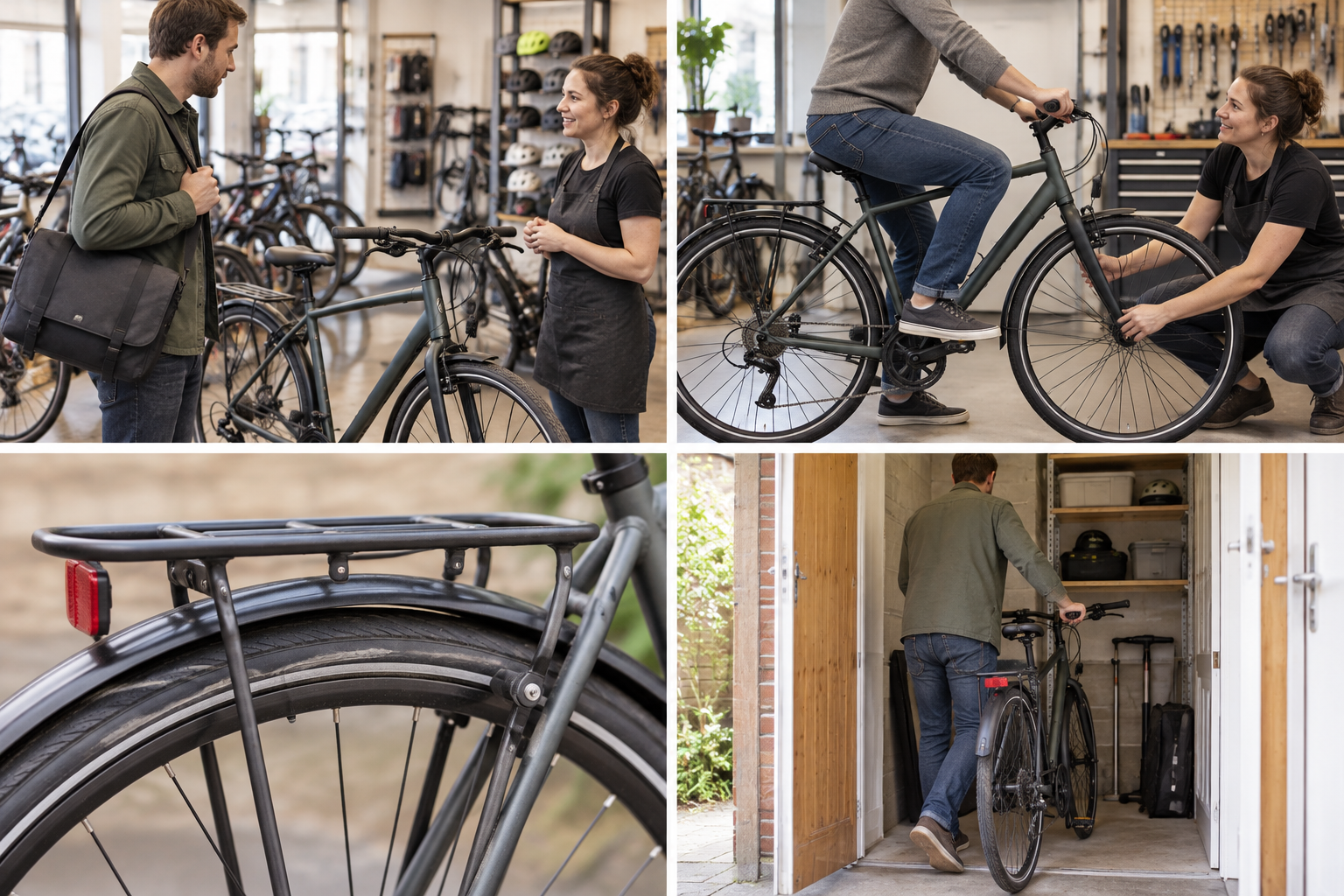
Take that description to the shop. It helps establish appropriate gears, tyres and carrying equipment. You do not need to buy for a dramatic expedition you might never take; the repeated Tuesday morning is the more useful test.
Fit matters before component prestige
Ask for a suitable starting size and saddle setup. On a supported bike, check that you can reach the grips and brakes comfortably. A permitted test ride should include starts, stops and a representative hill, rather than only a quick straight line.
Notice whether you can look ahead without strain and operate the controls deliberately. If the position is awkward, try a different size or approved adjustment. A respected brand or upgraded gear system does not correct an unsuitable fit.
Make room for daily equipment
Ask which rack and mudguards suit the exact frame and tyre combination. Mudguards need clearance (space around the tyres); rack mounts do not establish that every rack will fit. Try your normal bag and shoes, checking heel clearance and light visibility.
A pannier (a bag beside a wheel) can keep luggage off your back, but its shape and attachment must work with the bike. Check the finished arrangement, including whether it is manageable through your storage doorway.
Budget for the whole commute
Add rack, mudguards, lights, lock and fitting to the bicycle quotation. Ask about servicing and common replacement parts. Then compare the complete totals for bikes that meet your route and fit requirements.
The five models below serve different priorities. Use the table to narrow the choice, then read the individual trade-offs. A cheaper bike needing difficult accessory changes can cost more overall than a slightly dearer bike already suited to the job.
How we selected: We compared official product specifications, published UK prices where available and practical fit requirements. The selection labels are our assessment of those features. We have not personally tested these products.
Checked 12 October 2026. Prices refer to the named variant or package and can change. They do not guarantee stock or the lowest offer. Unverified UK prices are marked; US prices have not been converted into invented UK offers. These are five options by use, rather than a universal performance ranking. No affiliate links are included.
Compare the five options
| Product | Shortlist for | UK price checked | Key specification |
|---|---|---|---|
| Riverside 500 low step-through | Budget and easy mounting | £349.99 | Low-step frame; front suspension |
| Trek FX 1 Gen 4 | Entry-level fitness hybrid | £550 | Confirm exact generation and build |
| Trek FX 2 | The next FX price tier | £650 | Compare the actual shop build |
| Giant Escape Disc 2 (2024) | Alternative flat-bar fit | £650 on UK search listing | Named model year matters |
| Specialized Sirrus X 2.0 | Wider-tyre everyday riding | £699 | 42c tyres; hydraulic discs |
Budget and easy mounting
1. Riverside 500 low step-through
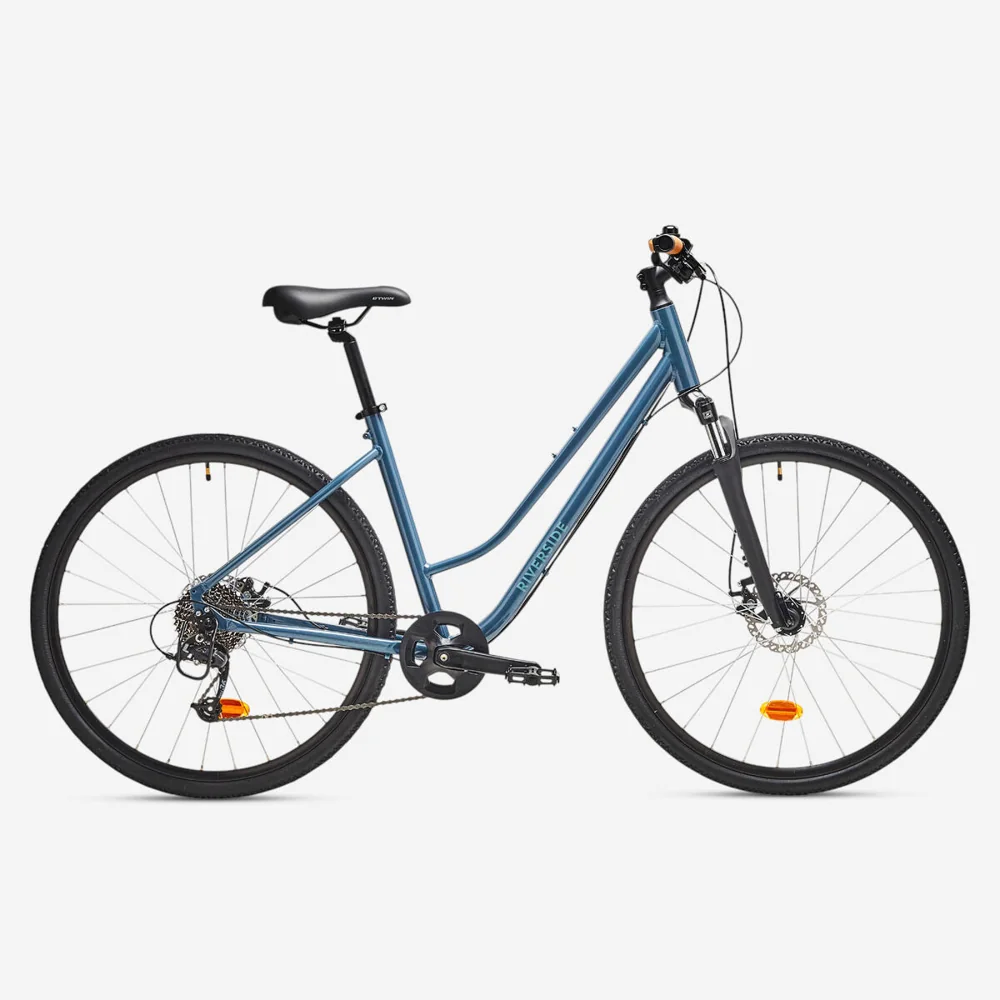
£349.99 · Low-step frame; front suspension
A low-step frame helps when mounting with everyday clothes or luggage. The listed model has front suspension and mechanical disc brakes. Compare it for maintained paths and everyday journeys rather than treating suspension as permission to ride difficult trails.
Why shortlist it: Lower purchase cost leaves more budget for luggage and security.
Trade-off: For smooth roads, test a rigid-fork alternative too; suspension adds another service item.
Official product specifications or approval
Our verdict: An accessible budget option; suspension servicing and the cost of commuting accessories reduce its overall appeal.
Entry-level fitness hybrid
2. Trek FX 1 Gen 4
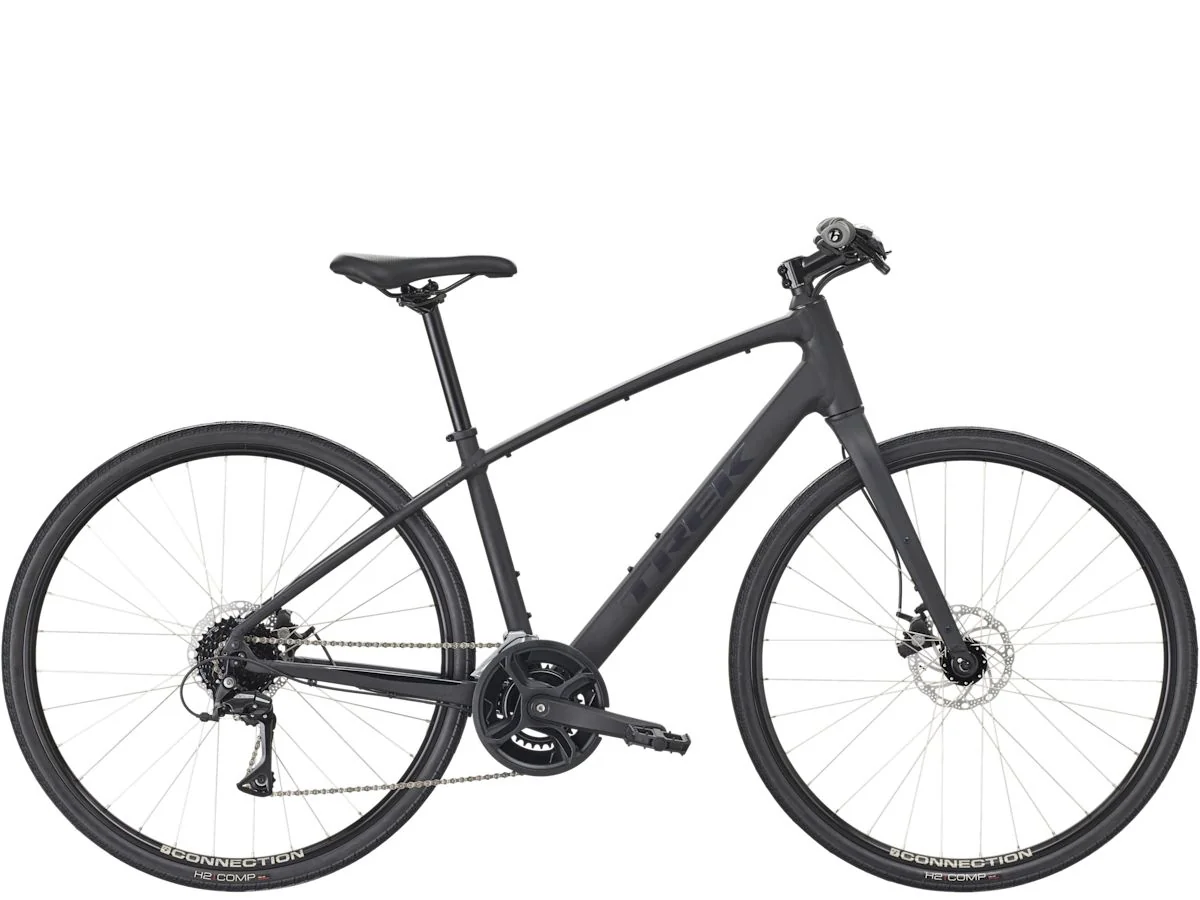
£550 · Confirm exact generation and build
The current FX 1 is a starting point when the £550 price leaves enough for a properly equipped commute. Ask the shop to show the exact build and demonstrate the lowest gear on a representative slope. Specifications from an older FX 1 may describe a different bicycle.
Why shortlist it: An accessible entry price within the current FX range.
Trade-off: A rack, guards and dependable lights may still need adding. Obtain a complete fitted quote.
The next FX price tier
3. Trek FX 2
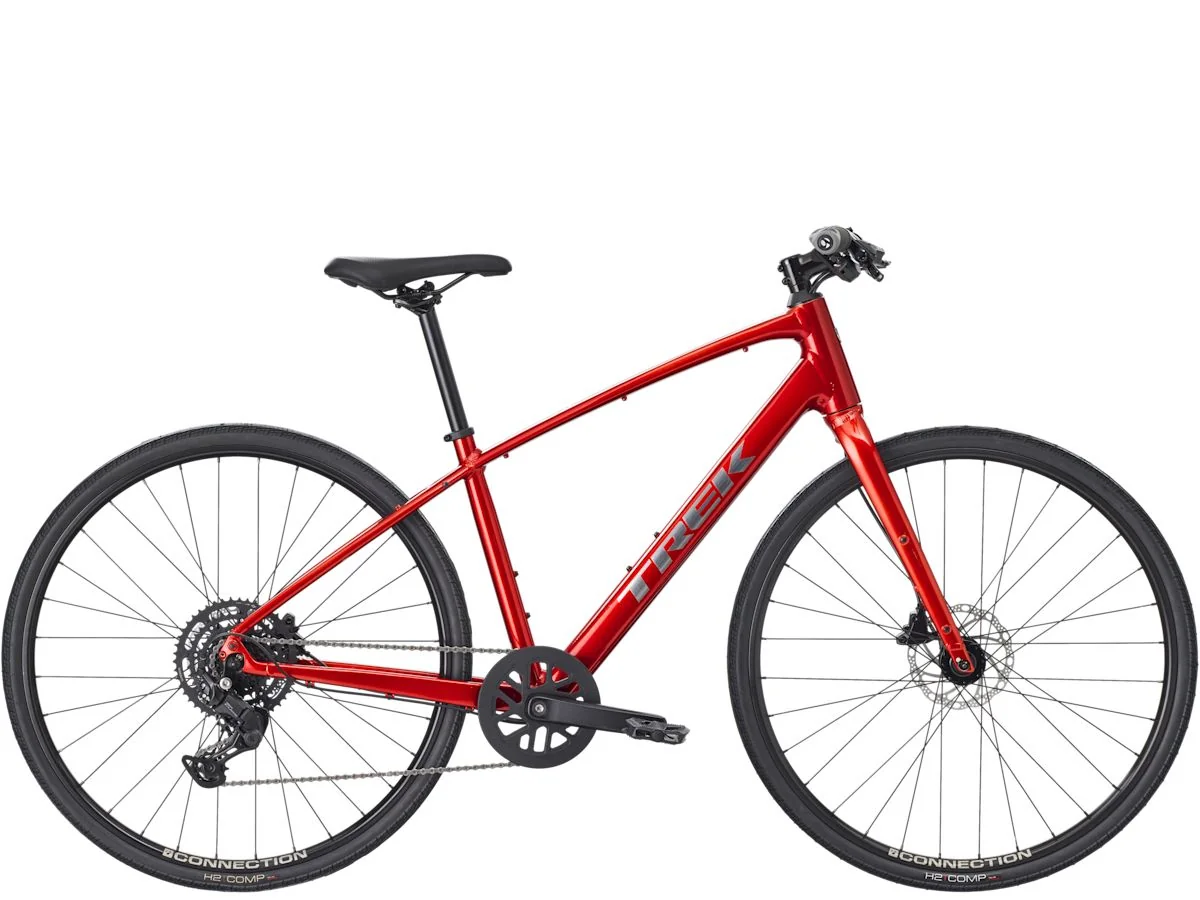
£650 · Compare the actual shop build
At the listed prices, FX 2 costs £100 more than FX 1. Test the two bikes in the correct size over the same route and ask which component differences matter for your journey. The larger model number does not automatically make the more expensive bike the better purchase.
Why shortlist it: A close price comparison against FX 1.
Trade-off: Confirm generation, component substitutions and accessories on the order.
Alternative flat-bar fit
4. Giant Escape Disc 2 (2024)
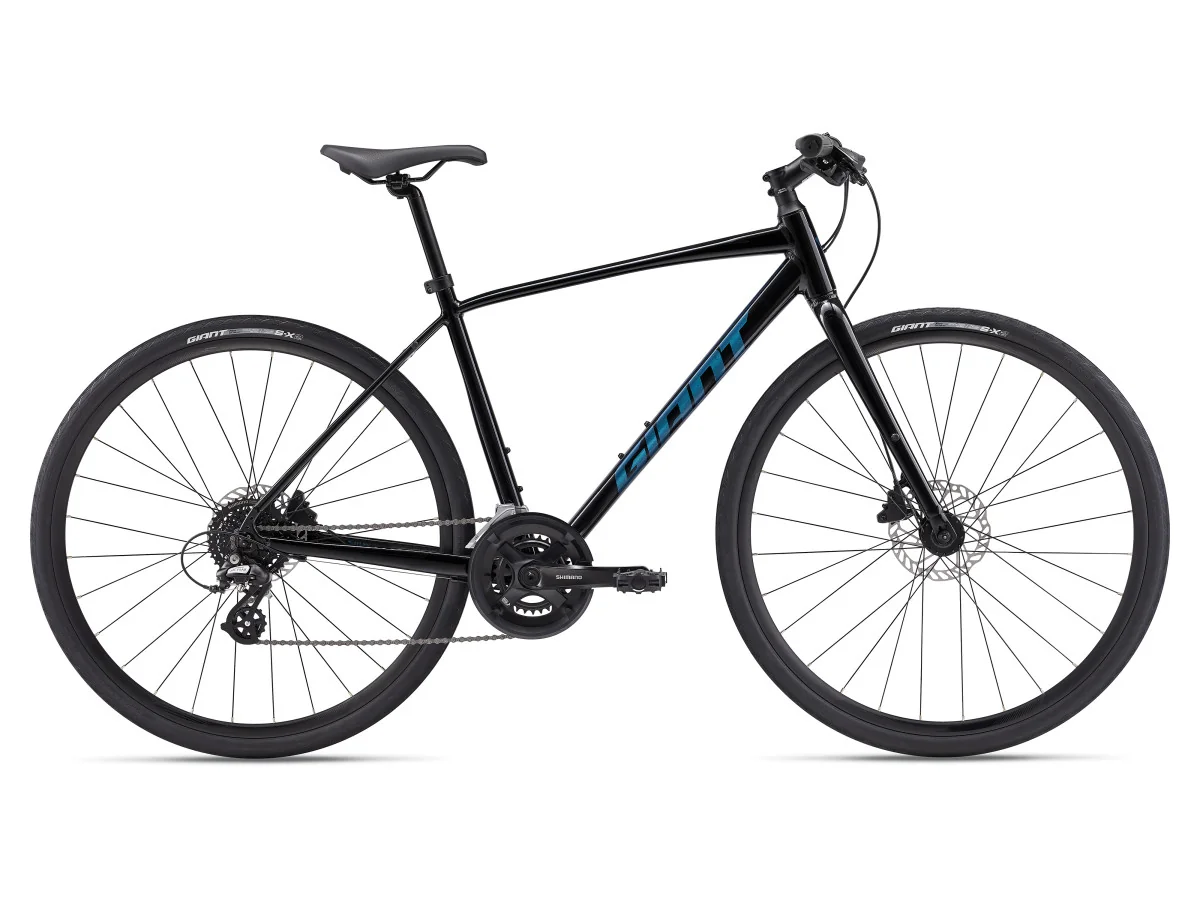
£650 on UK search listing · Named model year matters
Compare the Escape Disc 2 with the FX range if your local Giant dealer offers a useful size and service package. The exact model is important: Escape, Escape Disc and City versions are different listings. Compare the final quoted bicycle, not only its family name.
Why shortlist it: Another frame fit and local support option at a similar price.
Trade-off: Older colourways can have different discounts. Confirm the final price and supplied build.
Wider-tyre everyday riding
5. Specialized Sirrus X 2.0
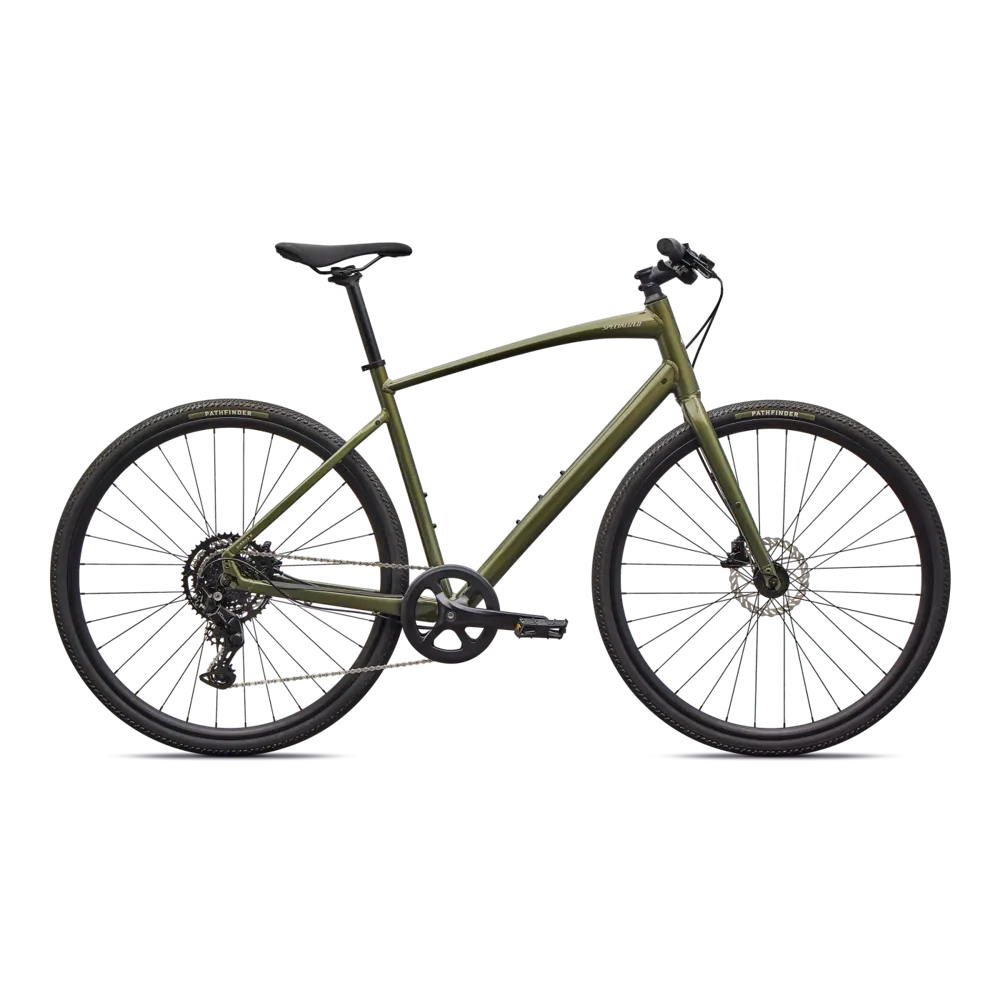
£699 · 42c tyres; hydraulic discs
The listed Sirrus X combines wider Pathfinder tyres, hydraulic disc brakes and a single-chainring layout. Rack and mudguard mounts add everyday utility. Try it over the broken surfaces on your commute before deciding how much its wider-tyre approach matters to you.
Why shortlist it: Useful equipment to compare for rougher urban surfaces.
Trade-off: The official summary says eight speeds while the detail lists nine-speed CUES. Confirm the actual build with the seller.
Budget for the complete commute
With an illustrative £750 total budget, a £550 bike leaves £200 for a lock, lights, guards, luggage and fitting; a £699 bike leaves £51. These are examples, not suggested accessory budgets. Price the complete setup before spending the whole amount on the bike.
A rack and pannier can keep a laptop off your back. Confirm rack approval, mounting hardware and load limits. Full-length mudguards can improve wet-weather comfort, but require the correct tyre clearance. Include the first service and replacement wear parts in your longer-term budget.
A useful test ride
- Start, stop and look behind without feeling stretched.
- Try a hill similar to the steepest one on your journey.
- Ride long enough to assess hands and saddle, rather than circling a car park once.
- Check the bike can be lifted into its storage space.
- Ask the seller to approve your planned rack, guards and carried load.
Correct frame size comes before colour or discount. Ask whether the quoted bike is assembled, whether pedals and accessories are included and what local servicing costs. For a wider comparison, read our bike-type guide.
Join the discussion
What has worked for you? Share your experience or ask a question about this article.
Sign in with GitHub to comment. Your comment and GitHub profile name will be public. Comments appear when posted and may be moderated afterwards.
Keep replies relevant and respectful. No spam, personal information or unsupported accusations. Discussion and privacy information.