A canal ride can offer a relaxed day beside the water, but towpaths are shared spaces with changing surfaces and access. This guide helps you choose a suitable stretch, ride considerately and plan a return with room for stops. You do not need an ambitious distance to have a good outing.
Check the stretch, not just the canal name
Find the waterway operator’s cycling-access information and current notices for your start and turnaround points. Check closures and possible alternatives, then follow signs when you arrive. A good section nearby does not establish that the whole towpath is open or suitable.
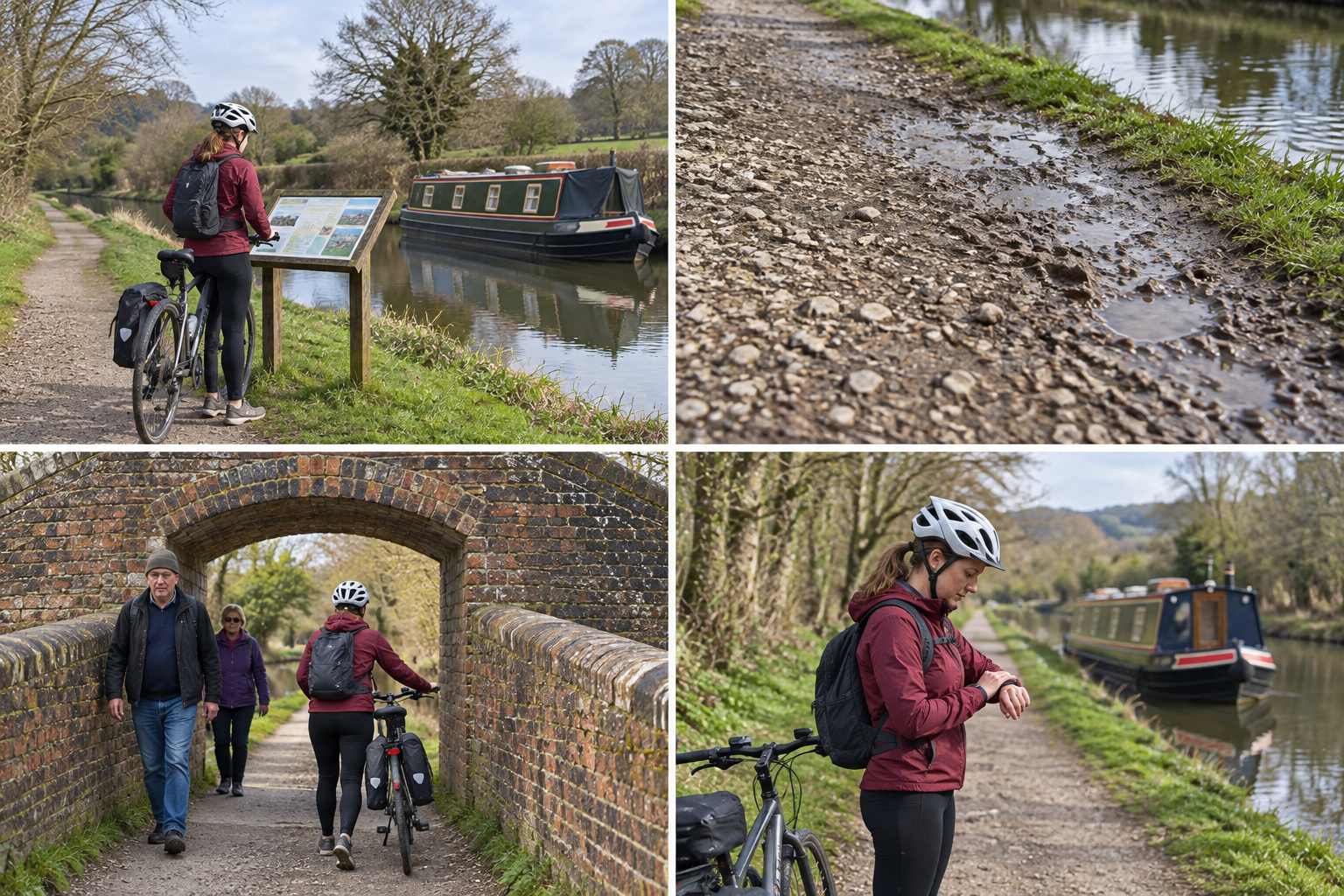
Save a shorter route or alternative before setting off. Access points can involve steps, gates or narrow bridges. The generic photographs illustrate the setting; they do not establish conditions on a named stretch today.
Let the surface set the plan
At the start, look at the usable width and whether the surface is paved, loose, muddy or slippery. Recent rain can change a route that was easy last time. Match the bike, tyres and your confidence to the conditions you can actually see.
There is no tyre width that makes every towpath appropriate. Walk or turn back when a confined or poor surface makes riding unsuitable. Check your bicycle’s permitted tyre clearance before changing tyres, including any room needed for mudguards.
Make passing a conversation, not a demand
Slow before approaching people and give a courteous warning. A bell lets someone know you are there; it does not grant priority or guarantee they have heard. Wait for room and leave enough space for an unexpected movement.
At a crowded stretch, narrow bridge or restricted edge, get off and walk where necessary. Keep a pace that lets you stop within the space you can see. Losing a little time is a sensible trade for keeping the shared path pleasant.
Plan the return before the outward ride
Choose a latest finish and work back through riding, stops and delays to set a turnaround time. An out-and-back route repeats the general line, but the return still requires energy and conditions can change. Mark usable exits and a shorter option.
For example, 24km at an assumed 12km/h moving average takes two hours of riding. Forty minutes stopped plus twenty minutes of delays make three hours overall. This is a calculation example, not a target towpath speed. Use a pace and distance that suit the day and your group.
Five checks before you set off
The final checks bring the route and practical preparation together. Confirm access and weather, then decide whether the bike, supplies and timing suit what you expect. Be ready to shorten the outing if the surface or shared-path conditions make that the better choice.
Checks to make
- Cycling access and closures with the relevant operator.
- Narrow or uncertain sections and your alternative route.
- Weather, brakes, tyres and secure luggage.
- A shared pace and turnaround time.
- Space for walkers, boat activity and wildlife; take litter home.
Start with a short familiar section if you want fewer uncertainties. After riding, note surface changes and useful exits.
Join the discussion
What has worked for you? Share your experience or ask a question about this article.
Sign in with GitHub to comment. Your comment and GitHub profile name will be public. Comments appear when posted and may be moderated afterwards.
Keep replies relevant and respectful. No spam, personal information or unsupported accusations. Discussion and privacy information.