An electric-bike conversion adds a motor, battery and controls to a bicycle you already own. It can be a useful way to keep a bike that fits you, but the kit price is only part of the decision. This guide explains the main systems, how to establish compatibility and what a finished conversion should cost. You do not need to know how to install a motor to ask the right questions.
Is your existing bike worth converting?
Start with the bicycle, because every extra part will depend on it. A tired chain is repairable; an unsuitable fork or damaged frame can rule out the project. Ask a workshop to inspect the frame, fork, wheel attachments, brakes and drivetrain (the chain and gears), specifically for the conversion you are considering.
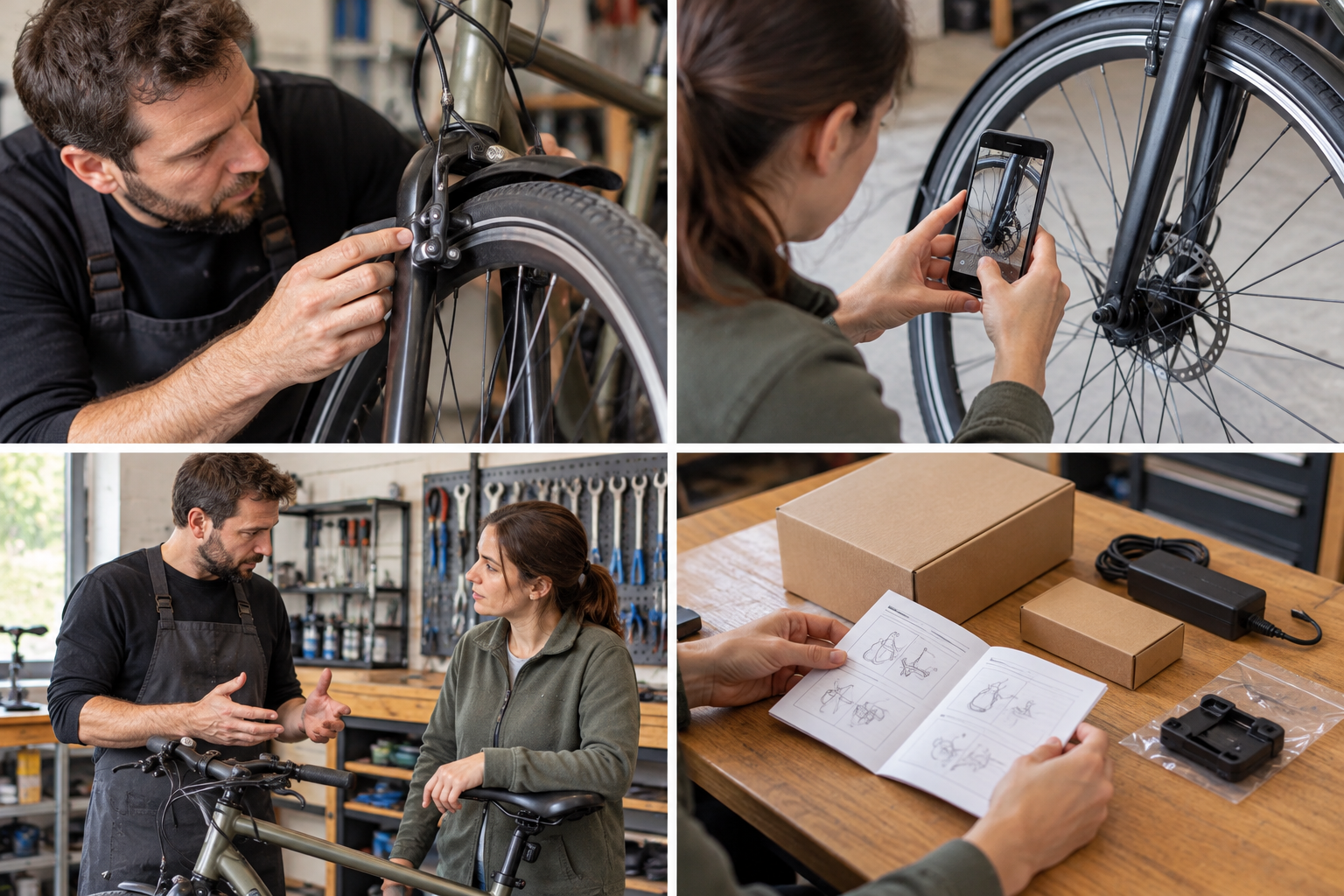
There is a good case for converting a sound bike that fits comfortably and already carries your luggage. The case gets weaker when you need substantial repairs or do not yet own the donor bike (the bicycle receiving the kit). Price those repairs before ordering anything. Otherwise, the apparent bargain may arrive in several expensive instalments.
Hub motor or mid-drive: what changes?
A hub motor sits inside a wheel. A front-hub kit changes the front wheel; a rear-hub kit changes the rear and must suit its gear and brake arrangement. A mid-drive motor acts through the chain near the pedals, which makes the crank area and drivetrain important compatibility checks. Neither description means a kit will fit every bike.
Give the supplier the model, wheel size, brake type and clear photographs of the axle attachments, crank area and proposed battery position. Ask it to confirm the exact bike-and-kit combination in writing, including any replacement parts. A vague promise that it fits most bikes is not enough to spend your money on.
Compare the complete cost
Ask for one quotation covering the kit, approved battery and charger, fitting, repairs and any necessary replacement parts. Then compare that total with a complete electric bike that would do the same journeys. Use ready-to-ride prices on both sides of the comparison.
For example, a hypothetical £500 motor kit without a battery, £200 battery, £150 fitting charge and £100 of repairs total £950. These are calculation examples, not current prices. Ask whether the quotation includes fitting and who will help with faults afterwards. Add any extra charges before deciding that conversion saves money.
What to ask at collection
Ask the installer to demonstrate the assistance controls, battery attachment and removal, charging procedure and what to do about an error message. Keep the manuals, serial numbers and warranty details together. Establish which workshop will maintain the electrical system as well as the bicycle.
Confirm the legal status of the completed bike, not just the motor label. For Great Britain, the key EAPC (electrically assisted pedal cycle) requirements include working pedals, no more than 250W continuous rated motor power and assistance cutting off above 15.5mph. Throttle operation can introduce approval requirements. The official rules and charging guidance below explain the checks; a conversion is not exempt because it began as an ordinary bicycle.
Plan charging and installation as part of the project
Charging and maintenance belong in the buying decision because the battery and charger work as part of the approved system. Obtain instructions and a handover demonstration so you know how to attach, charge and look after the equipment before taking it home.
What to confirm
- Government guidance says matched complete systems from reputable retailers are generally the safest option.
- For a conversion, obtain conformity documentation (evidence about compliance with applicable requirements) and installation instructions.
- Use a competent, insured installer and the authorised charger.
- Do not charge while asleep, away or on an escape route.
- Do not use or open a damaged battery; seek the manufacturer’s advice.
- Before collection, ask for a demonstration of battery attachment, charging, error messages and routine maintenance.
- Keep invoices, serial numbers and instructions together so replacements can be correctly identified.
Join the discussion
What has worked for you? Share your experience or ask a question about this article.
Sign in with GitHub to comment. Your comment and GitHub profile name will be public. Comments appear when posted and may be moderated afterwards.
Keep replies relevant and respectful. No spam, personal information or unsupported accusations. Discussion and privacy information.