A car bike rack is a system: the car, its mounting points, the carrier and the bicycles all have to work together. This guide explains roof, towbar and rear-mounted choices, the measurements you need and the checks to make before driving. Start with compatibility, then compare convenience and price.
Which mounting type suits your car?
A roof carrier needs approved roof bars and fittings. A towbar carrier needs a suitable towbar and permitted loading. A rear strap-mounted carrier must be approved for the particular vehicle body. One mounting type cannot be assumed suitable because another carrier fits the same car.
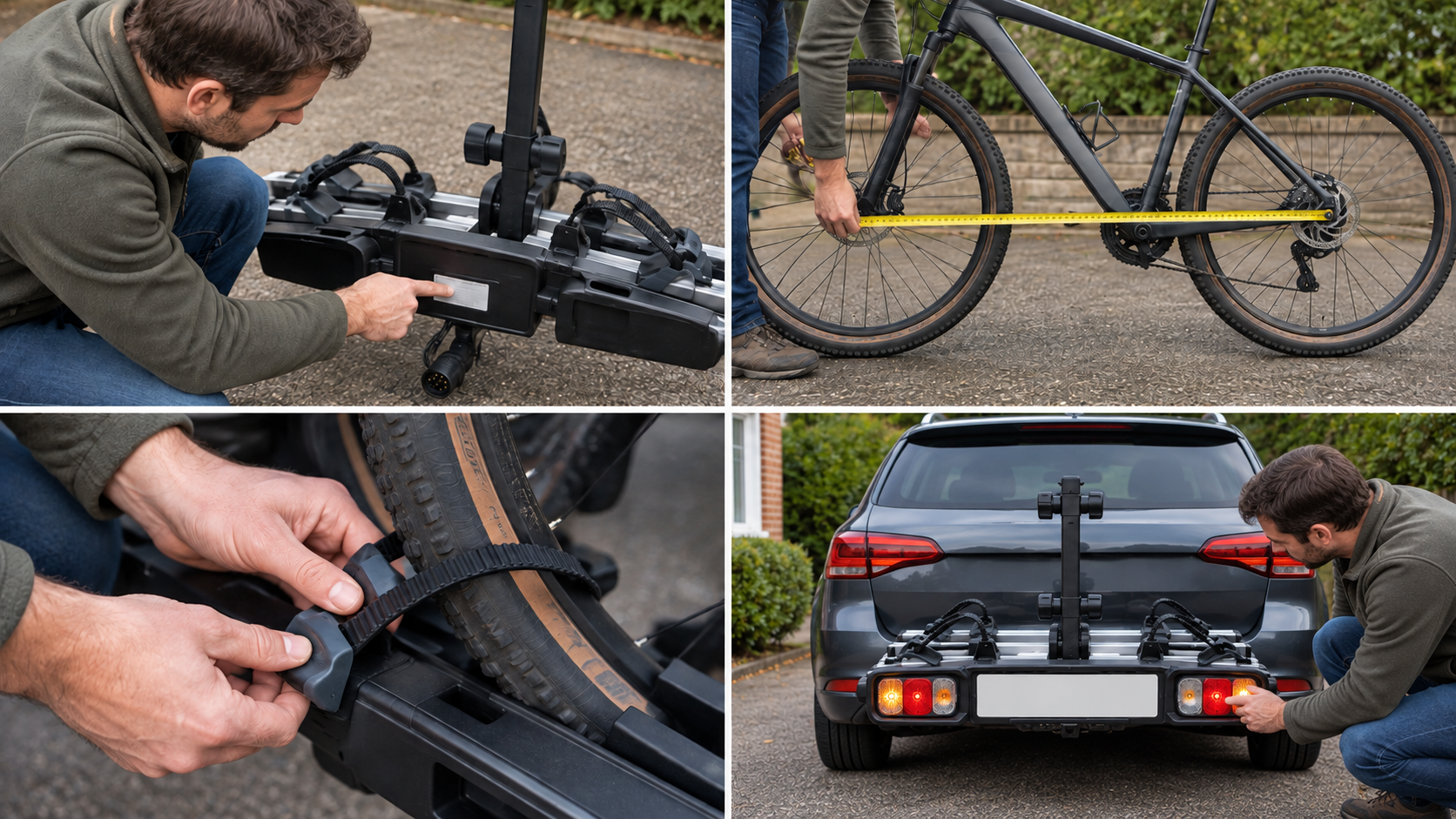
Find the exact model, year and body style in the carrier maker’s fit information. Keep the matching installation manual. Roof loading involves lifting to height; rear loading can affect access to the boot and visibility. Think about the person who will do the loading, not just the number of spaces advertised.
Measure the bikes as they will travel
Record each bicycle’s transport weight, wheel diameter, tyre width and wheelbase (the distance between axle centres). Note frame shape, mudguards and anything that could obstruct an attachment. Compare those figures with the exact carrier’s permitted ranges.
Remove a battery or accessory only where the bike maker allows it. Do not assume a brochure weight represents your size and equipment. A carrier can have enough overall capacity while one individual position is unsuitable for a heavier bicycle.
Fitting is specific to the carrier
Read the full fitting sequence before starting. Fit the empty carrier with the specified tools, adapters and tightening values, then load the bikes into the positions the manual permits. Fasten each required frame and wheel attachment in order.
The wheel strap in the photograph illustrates one kind of fastening; it is not a universal fitting instruction. If a clamp or strap will not engage correctly, unload and resolve the compatibility question. Improvised extra straps do not establish that the installation is correct.
Finish with the whole vehicle
Check the lamps on an empty carrier first, then repeat the visibility check with the bikes loaded. Confirm the registration plate, lights and reflectors remain visible as required. Check bike separation and the documented road, exhaust and vehicle clearances.
Record added height or length before entering a car park or reversing. Roof bikes are easy to forget when the journey feels routine. The calculations and departure checklist below cover weight limits and the remaining checks; use the manufacturer’s specified recheck intervals during travel.
Compare the loading routine
A carrier has to work for the person loading it. Roof systems involve lifting a bike higher, while rear systems change access to the boot and can extend the car’s length. Think through the routine with your actual bicycle before comparing features or prices.
Practise lifting and securing the actual bicycle at roof height before choosing a roof system. For a towbar system, check towbar approval, bike attachment and boot access; for a rear strap carrier, check approved fixing and contact points for the car.
Consider loading in rain, unloading when tired and storing the rack between trips. Try the routine with the person who will normally do it, rather than relying on someone else finding it easy.
Calculate the whole load
Weight limits apply to different parts of the system. The carrier’s bicycle payload is not necessarily the load your vehicle permits. Add the relevant parts together, then check each individual limit and any manufacturer-specific load table.
For a roof system, include the bars, carriers and bicycles as required by the vehicle and rack manuals. For a towbar system, check the vehicle, towbar and carrier limits, including nose load (permitted vertical load on the towbar) and each bike position’s limit. Use the lowest applicable restriction.
For illustration, 5kg of roof bars, 8kg of carriers and two 15kg bicycles total 43kg. That fits within a hypothetical 60kg total limit, but individual limits and fit still need checking. Replace each example value with the documented figures for your own setup.
Use the same departure check every time
The departure check verifies that the setup is still secure after loading. Work from the car attachment outwards to each bike, then check visibility and the route. Repeat it on every journey rather than relying on the fact that the carrier worked last time.
Checks to make
- Check every car-to-rack fixing in the manual’s order.
- Check every bike attachment and strap.
- Remove loose items as instructed.
- Check separation, lights, number plate and route height restrictions.
- Follow the maker’s driving limits and its instructions for stopping to recheck the load.
- After unloading, inspect the bikes and carrier for damage or loose parts.
Keep the manuals with the car documents. A photograph of a correctly fitted setup can help you repeat it, but does not replace physical checks.
Check the fit before you buy
Carrying two heavy e-bikes by car: weight limits and fitting checks
Work out whether your car, towbar and carrier can carry two e-bikes, with weight examples, fit checks and a UK departure checklist.
Join the discussion
What has worked for you? Share your experience or ask a question about this article.
Sign in with GitHub to comment. Your comment and GitHub profile name will be public. Comments appear when posted and may be moderated afterwards.
Keep replies relevant and respectful. No spam, personal information or unsupported accusations. Discussion and privacy information.