Two electric bikes can exceed a transport limit even when a carrier is advertised for two e-bikes. The carrier itself weighs something, each bike position has a limit, and the car and towbar add their own restrictions. This guide separates those checks and works through the arithmetic so you know which figure goes where.
Establish the transport weights
Weigh each bike in the condition in which it will travel, using suitable equipment or asking a shop. Include everything still attached. Remove a battery only if its maker permits that for transport. Record the carrier weight with fitted accessories as well.
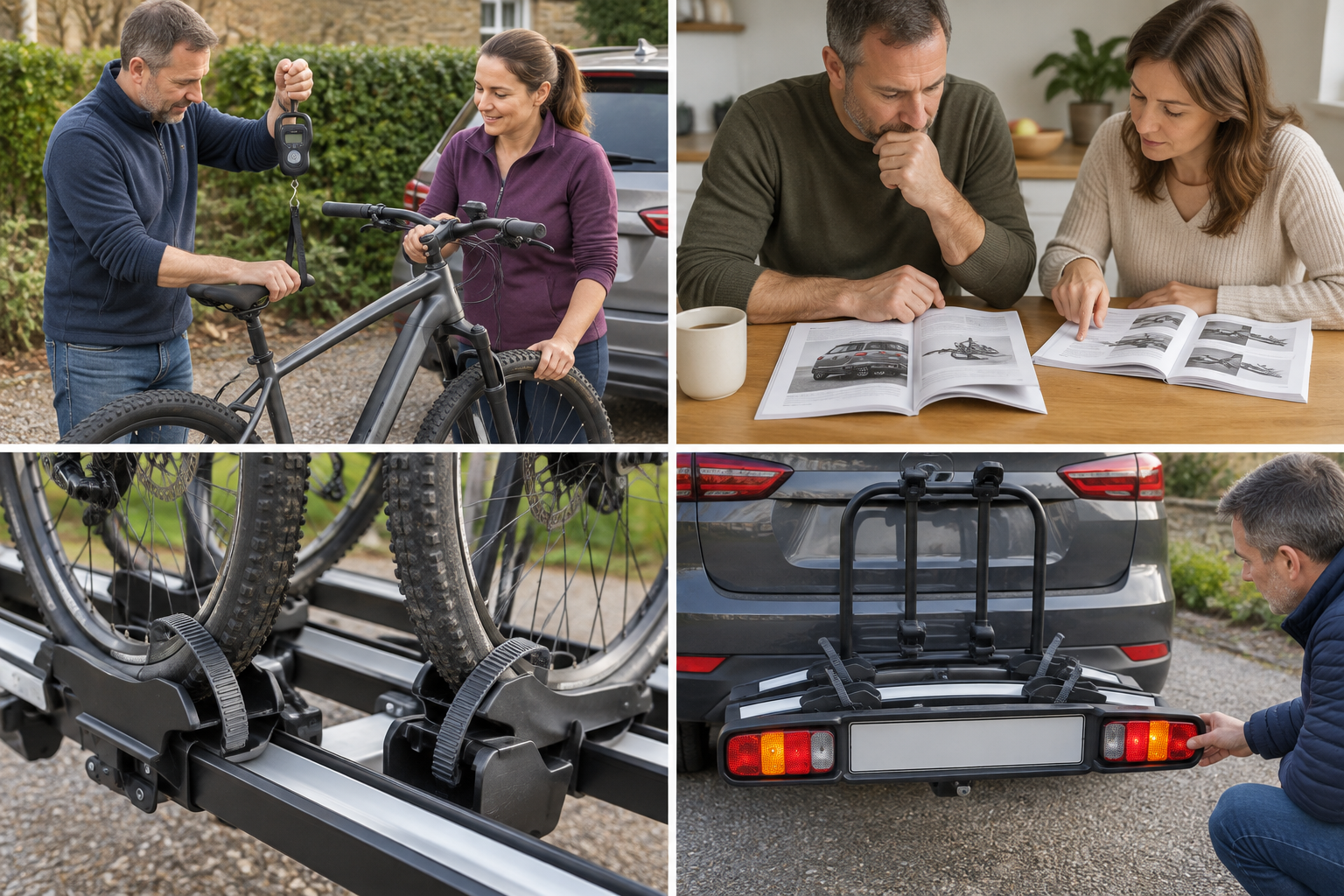
Keep the two bike weights separate. The combined figure is useful for payload, but it can hide a bike that is too heavy for its individual position. A guessed or different-size brochure weight is a weak starting point for a close calculation.
There are several separate weight checks
Vertical load is the downward load allowed at the towball. Compare carrier plus bikes and relevant accessories with the applicable vehicle and towbar limits, using the lower figure and any carrier-specific load table. Payload is the load the carrier may carry; check the bikes against that separately.
For an arithmetic example, an 18kg carrier with two 27kg bikes totals 72kg. The bicycle payload is 54kg, and each position carries 27kg. Those three figures answer different questions. Passing one does not prove the others pass, and the vehicle’s total laden and axle limits still apply.
Weight capacity does not establish physical fit
Long wheelbases, wide tyres, mudguards and unusual frames can prevent correct fastening even when the weight calculation passes. Compare the actual dimensions with the permitted ranges and confirm the attachment method is approved for the frame.
Load in the maker’s specified order and check that bars, pedals and saddles cannot damage the other bike. If a fixing cannot be used as instructed, choose another approved arrangement. The worked examples below show numerical comparisons; the weight checker cannot approve the physical installation.
Check the loaded system before driving
Connect and test the empty carrier’s light board, then load the bikes and check visibility again with a helper. Confirm the appropriate registration plate, all lamps, clearance and the vehicle checks in the manuals.
Follow the documented recheck intervals on the journey. A bike-count label is not permission to ignore an exceeded limit. Use the examples and checker below with your own measured figures, and obtain missing limits from the relevant maker before relying on the setup.

Calculate the load: three worked examples
For an approved towball-mounted setup, a first check is carrier + fitted accessories + both bikes against the applicable vertical-load limit. Then check the carrier’s total and individual bike limits. A manufacturer’s more restrictive carrier-load table takes precedence.
These are hypothetical examples, not specifications for the pictured rack:
- Example A — total load fits: an 18kg carrier plus two 26kg bikes weighs 70kg. Against a 75kg applicable vertical limit, that leaves 5kg. A hypothetical 60kg bicycle payload and 30kg individual limit also accommodate these bikes. Geometry, vehicle approval and axle limits still need checking.
- Example B — the car is the bottleneck: the same setup on a system limited to 60kg exceeds that limit by 10kg. A rack advertised for 60kg of bicycles does not fix this. Even removing two 3kg batteries leaves 64kg.
- Example C — one bike is too heavy: a 32kg bike and a 20kg bike total 52kg, below a hypothetical 60kg payload. But the 32kg bike fails a 30kg individual-bike limit.
Keep the units in kilograms and write each limit alongside its source. Do not round a measurement down to make it fit. Check the vehicle’s maximum laden weight (car, people and luggage together) and rear-axle limit as well; a rear load can increase axle loading by more than its own weight because it sits behind the axle.
Batteries, loading and UK road checks
Remove a battery only where the bike maker permits it, following its transport instructions. Secure it inside the car, protect the terminals from contact with metal objects and keep it away from heat. Removing a battery reduces carrier load but does not remove its weight from the car’s overall load.
- Load in the order specified by the rack maker and use every required attachment. Remove loose luggage, pumps and other items as instructed.
- Keep the registration readable. If the bikes obscure it, fit a compliant matching rear plate in the carrier’s intended position.
- Check rear lamps, indicators and required reflectors remain visible; use an appropriate working lighting board where needed. Check the high-level brake light too.
- Make sure the load is secure and does not project dangerously. Check rearward visibility and whether additional mirrors are required.
- A carrier fixed to the car is not a trailer. Do not apply trailer speed limits simply because it uses a towball; follow road limits and any lower rack-maker limit.
Official guidance: Highway Code rules 89–98 and number-plate requirements. For a specific example of how rack weight changes permitted bike payload, see Thule’s model 928 fitting manual; its figures are not universal.
Try your own weight figures
Use the towbar carrier weight checker to compare the numbers from your manuals.
Join the discussion
What has worked for you? Share your experience or ask a question about this article.
Sign in with GitHub to comment. Your comment and GitHub profile name will be public. Comments appear when posted and may be moderated afterwards.
Keep replies relevant and respectful. No spam, personal information or unsupported accusations. Discussion and privacy information.