
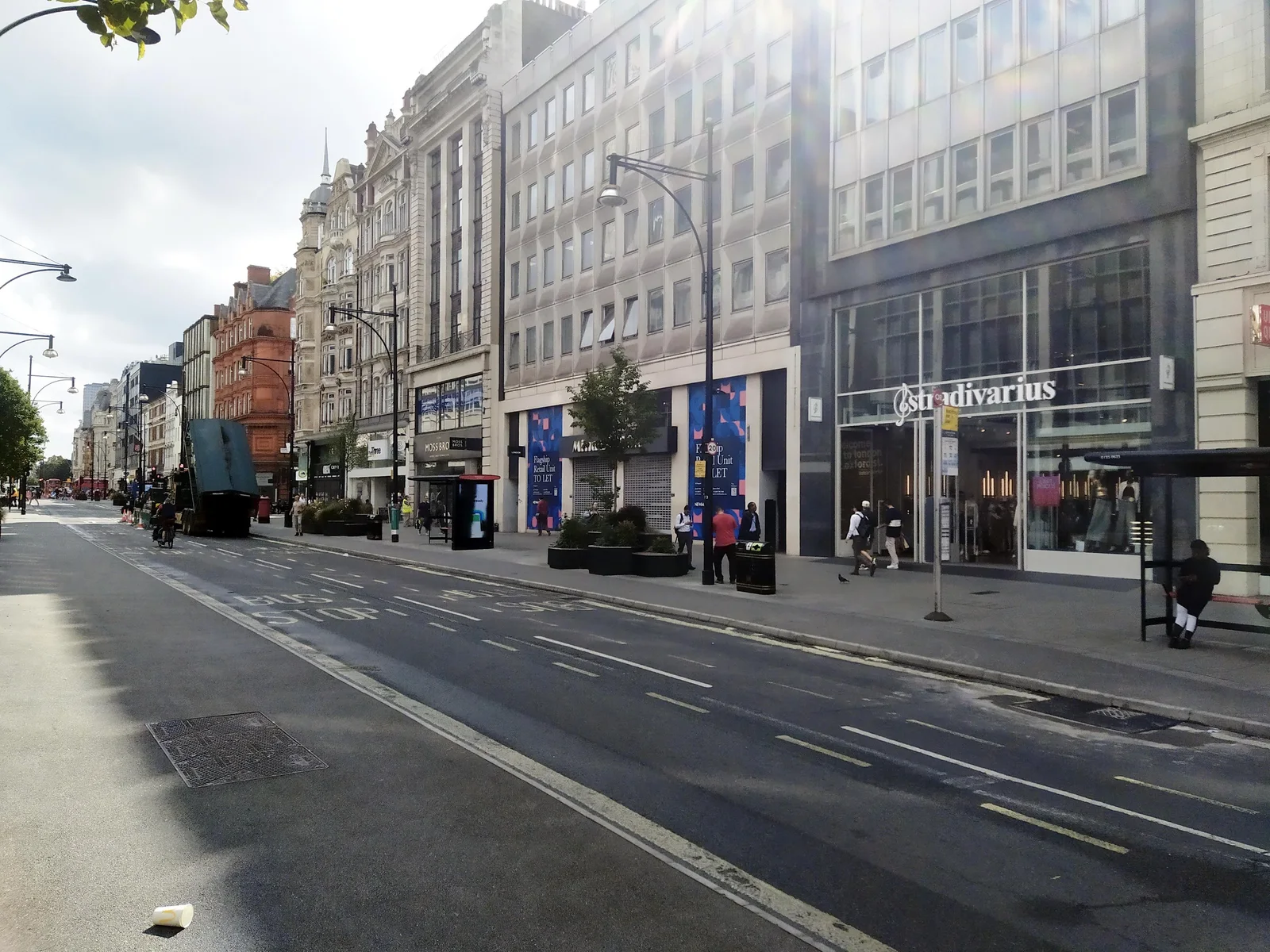
A traffic-free shopping street sounds like good news for a bike journey. On Oxford Street, though, the new arrangement is for people walking and wheeling: cycling through the affected section is excluded as well.
Transport for London’s change takes effect on Monday 26 October 2026 between Orchard Street and Great Portland Street. If that stretch sits on your usual route across central London, allow time to find an alternative rather than assuming the removal of motor traffic creates a new cycle link.
Where the rule applies
TfL’s published rules exclude cycles, scooters, pedicabs, cars, taxis and private-hire vehicles from the designated section, 24 hours a day, seven days a week. This is a defined part of Oxford Street, not a ban on cycling throughout the surrounding area.
There are exceptions for emergency vehicles at any time and delivery and servicing vehicles between midnight and 07:00. Those exceptions do not create a general overnight cycling window. TfL states: “Cycling will not be permitted on the traffic-free section of Oxford Street.”
Crossing it is a different journey
Several north–south streets remain open as crossings, including Duke Street, Vere Street/New Bond Street and Regent Street. Check the official area map and current travel advice for the full crossing list and temporary changes.
That distinction matters. Riding along the shopping street and crossing it to reach another neighbourhood are different movements. An open crossing does not give permission to turn into the restricted section. Follow signs at the junction itself.
Construction work continues as the transformation begins, so surrounding layouts may change. TfL warns of possible short-term closures and advises allowing extra journey time. A route saved before the change may need revisiting; use current signs and TfL’s journey planner rather than following an old line blindly.
Before you set off
- Check whether your route uses the restricted east–west section.
- Choose a permitted alternative or an open north–south crossing.
- Allow extra time for works and unfamiliar junctions.
- If visiting the shops, plan where you will finish riding and secure your bike.
Read TfL’s rules and exemptions rather than assuming “traffic-free” means unrestricted bicycle access.
Our view: the surrounding routes matter now
Giving people more room to walk and wheel through a busy shopping district is a worthwhile aim. A cycle route through the middle of dense pedestrian movement is not automatically the right answer, particularly where people need to cross freely, stop or move at a different pace.
But riders still need a comfortable way across the city. Removing a through route works much better when the alternative feels obvious, direct and safe. Sending someone round the block is a small request on a map; it becomes a bigger one if the diversion involves awkward turns or mixing with displaced traffic.
The useful test of this change will therefore extend beyond the new pedestrian space. Clear signs, sensible crossings and good connections around it will determine whether arriving by bike remains an easy choice. For now, plan the final approach as carefully as the rest of the ride.
Comments & discussion
Have your say. No account needed; reader comments appear after review.
Leave a comment