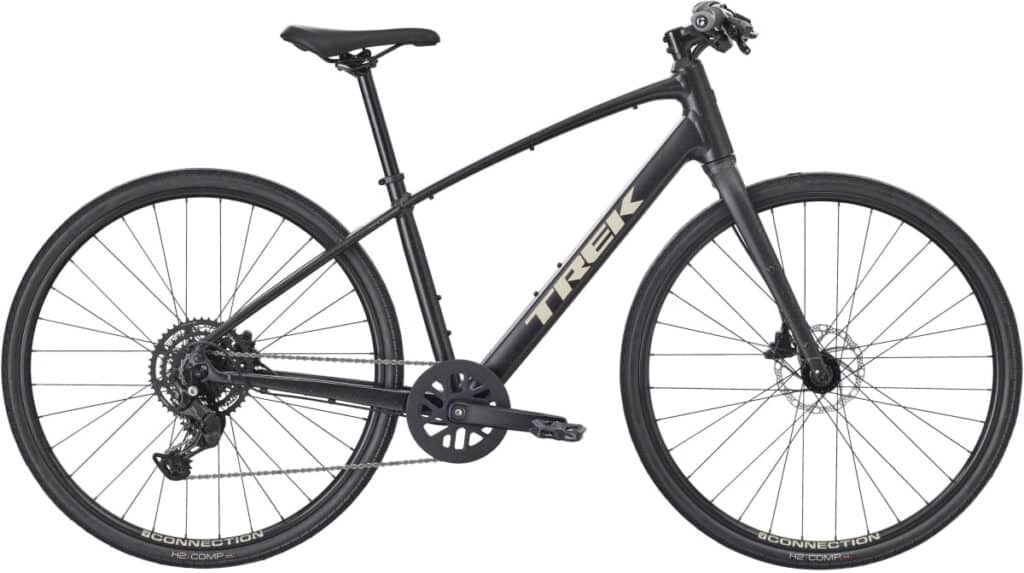
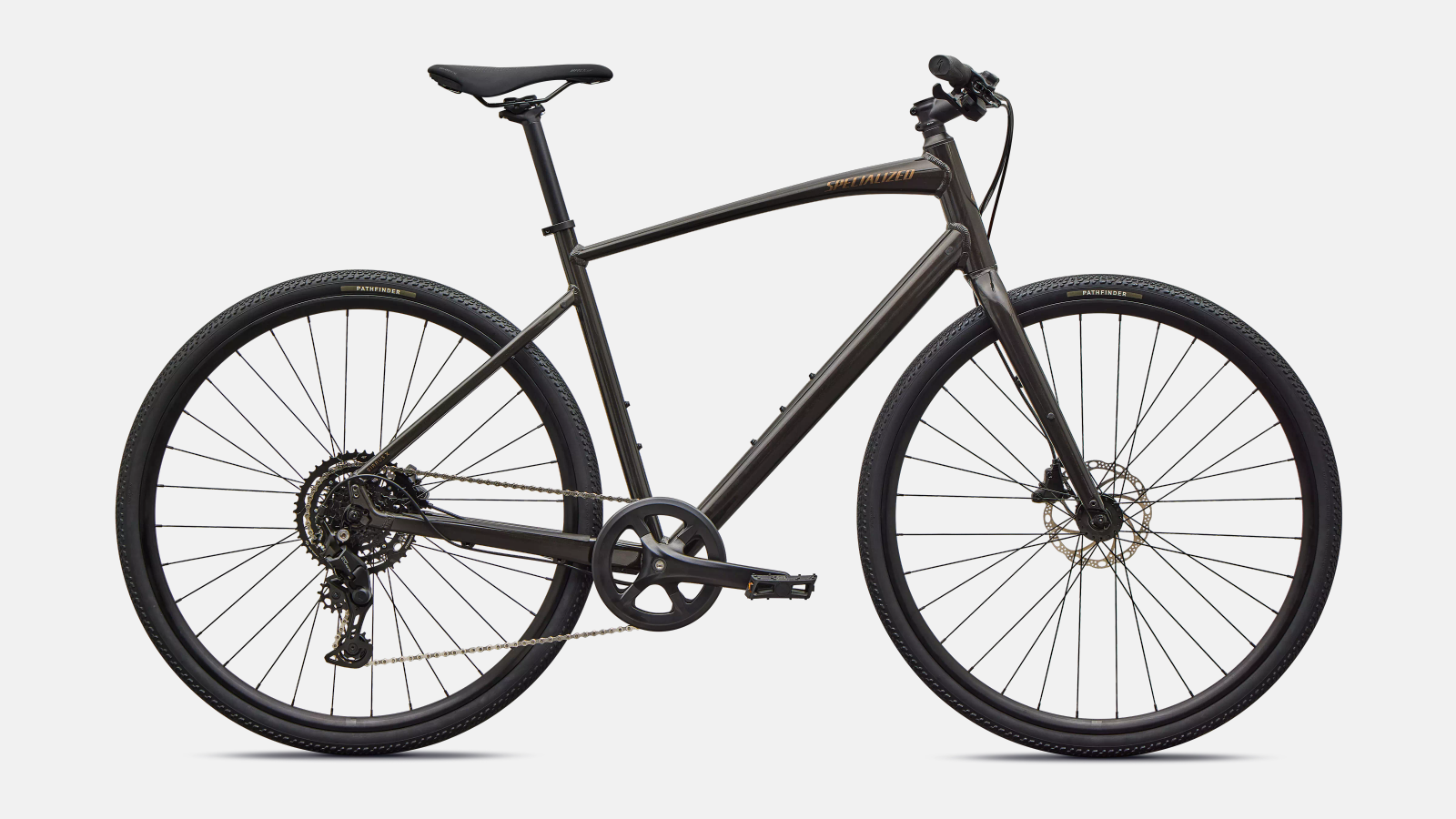
At the checked prices, the Trek costs £49 less; the fit and full deal matter more. This guide compares the 2026 FX 2 Stepover Gen 4 at £650 with the 2027 Sirrus X 2.0 at £699. Both are flat-bar bikes for everyday rides. The exact year and build matter: these names cover more than one bike.
The everyday verdict
Two good bikes. Let fit and the deal decide.
Having ridden both, I would be happy with either for everyday use. The differences are small. I would choose the one that fits best and leaves the best deal once the bags, lights and other parts I need are in the bill.
The Trek’s case
At the checked prices, the Trek is £49 cheaper and has slightly lower gearing. A discount on either bike could easily change the value comparison.
The Sirrus’s case
The Sirrus tyres are wider, but that alone would not decide it for me. Fit, tyre pressure and the full deal matter more than a small edge on a parts list.
Prices checked 15 October 2026. Stock and shop builds can vary. Photos are from Trek through its retailer, and Specialized. See photo credits.
What your money buys
Both have one front chainring [the toothed ring beside the pedals]. That means there is no front gear change to learn. You use one gear control to choose between the nine cogs at the rear wheel.
The cassette is that group of rear cogs. Both bikes use Shimano CUES parts to change between them. Compare the size of the front ring and largest rear cog when you want to know which climbs more easily.
Hydraulic disc brakes use fluid to press brake pads against a disc at the wheel. Both bikes have them. For your choice, first check whether your fingers can reach the levers with ease. The name of a brake system cannot tell you that.
The FX has a 40-tooth front ring and 35mm tyres. The Sirrus has a 42-tooth ring and 40mm tyres. Both rear cassettes go from 11 to 46 teeth. Keep the rear cog the same and a bigger front ring moves you farther per pedal turn. That makes the Sirrus gears a little higher.
Check the version before using this comparison. The Trek is the UK-listed 2026 Gen 4 Stepover, reference 57139. The Sirrus X 2.0 is the 2027 model, product 263364. A model year can go on sale before that year starts. An older FX 2 or another Sirrus may have different parts.
Gearing verdict
Both give you a useful spread of gears
The Trek has a slightly easier lowest gear. The Sirrus has a higher top gear. I have ridden both, and that small gap would not decide the choice for me. The easier gear is useful, but it does not turn these two bikes into different sorts of machine.
My advice: pick the bike that fits you best and gives you the best deal, including the accessories you need. The gears on either would suit me for everyday riding.
See the calculator figures and sources
| What we entered or calculated | 2026 Trek FX 2 Gen 4 | 2027 Sirrus X 2.0 |
|---|---|---|
| Front chainring | 40 teeth | 42 teeth |
| Rear cassette | 9-speed, 11–46 teeth | 9-speed, 11–46 teeth |
| Tyres used in calculation | 700×35mm | 700×40mm |
| Lowest gear: metres per pedal turn | 1.89m | 2.01m |
| Top gear: speed at 80rpm | 23.6mph | 25.1mph |
| Overall gearing range | 418% | 418% |
Setup A: Trek, 40T chainring, 700×35mm tyres. Setup B: Sirrus X, 42T chainring, 700×40mm tyres. Both use the 11, 13, 15, 17, 20, 23, 28, 36 and 46-tooth Shimano cassette sequence. Circumference is estimated from a 622mm rim bead-seat diameter plus twice the nominal tyre width; no measured wheel rollout was entered.
Gear inches include wheel size in the gearing figure. The Trek’s lowest and highest figures are 23.7 and 99.1. The Sirrus figures are 25.2 and 105.5. With tyre size held the same, the Trek’s smaller front ring alone makes its gearing 4.8% lower. Actual tyre size, pressure and load can change the rolling distance.
Parts checked 15 October 2026. The Sirrus product is 263364; the Trek is the named Gen 4 build. Check that the shop’s bike has the same parts. The FX here has a 40-tooth front ring, 11–46 rear cogs and 35mm tyres. Other years or markets can differ.
Comfort: tyres first, suspension second
The Sirrus tyres are wider. That may give more scope to tune the pressure for rough roads and firm paths, within the tyre and rim limits. The Trek tyres may already feel fine for your route. Width is one clue to comfort, not a verdict on the whole bike.
Both bikes here have rigid forks: their forks do not move to absorb bumps. Some dearer Sirrus X bikes use Future Shock, a system below the bars that helps reduce bumps reaching your hands. The listed X 4.0 has 20mm of movement. The X 2.0 here does not have that feature.
We would look at fit and tyres before paying much more for bar suspension. If sore hands are your main issue, ask a shop to compare the options. A demo may help if one is offered. Check the full price too; the higher model buys a different build, not just one feature.
Handling: responsive in town and on gravel lanes
Having ridden both, I found them quick to respond and easy to steer through traffic where there was room. I enjoyed them on gravel lanes too. Neither made me wish I had chosen the other for handling. For those everyday rides, I would be happy with either.
Ask to sit on the right size while staff hold it safely. Check your grip and whether your fingers reach the brake levers. A similar shop bike can help if the exact one is not in stock. Ask which parts differ. You may get a demo day or a short permitted ride, but do not base the choice on being able to take both bikes round your home route.
If a ride is offered, use starts, stops and turns to learn what you can. A short flat route can reveal a lot about reach and control. It cannot prove long-ride comfort or how the bike will climb with your work bag. Ask about adjustments and return terms before paying.
Everyday practicality and the real price
Both frames have points for a rack and mudguards. The checked Sirrus lists low-rider rack mounts on its steel fork; the FX lists fork rack mounts too. Those holes are a start, not a load approval. Ask which rack and guards suit the exact bike, and what weight and tyre limits apply.
Add the things you need for work: a lock, lights, mudguards and a rack if you carry bags. Include fitting charges. Check heel clearance [the gap between your shoe and the bag] with your normal shoes. A good bare-bike price is less helpful if the bag hits your heel.
Fit and the complete price would decide it for me. I would be happy with either bike for everyday riding. The checked Trek price is lower, but a sale could change that. Compare the size and build actually for sale, with the extras you need. I would not pay more just for this small gearing difference.
Specifications and calculation notes
The figures use the UK Sirrus listing and Trek’s parts list, checked against a UK shop’s 2026 listing. The gear sums use those same tyre and tooth sizes. Wheel size is an estimate, not a measured roll along the ground.

Comments & discussion
Have your say. No account needed; reader comments appear after review.
Leave a comment