
A missing stretch in Brighton’s Valley Gardens cycling corridor has been completed, connecting the earlier phases to the seafront with 500 metres of separated cycle lane. Brighton & Hove City Council officially opened the final phase on Friday 16 October.
The former Aquarium roundabout near the Palace Pier has been replaced by a junction with crossing points for people walking and cycling. The work completes the wider project running south from St Peter’s Church through the city centre to the Old Steine and the coast.
What has changed on the ground
The council’s opening announcement lists wider pavements, more direct crossings and a new public space between the Royal Pavilion and the War Memorial. Changes to the roads include resurfacing, a different layout for motor traffic and new bus stops. The authority says the pavements are more accessible and free of obstructions.
For riders, the important addition is continuity. A protected section can be useful on its own, but a connection that carries a journey through a junction and on to its destination is more valuable. This phase joins the cycle lanes delivered in the first two stages rather than leaving a separate short stretch by the sea.
The announcement also records improved lighting around Old Steine, 25 benches and 35 additional trees. Eight of the trees are due to be planted during the autumn, so the ceremonial opening does not mean every piece of landscaping is already finished.
A transport route and a place to stop
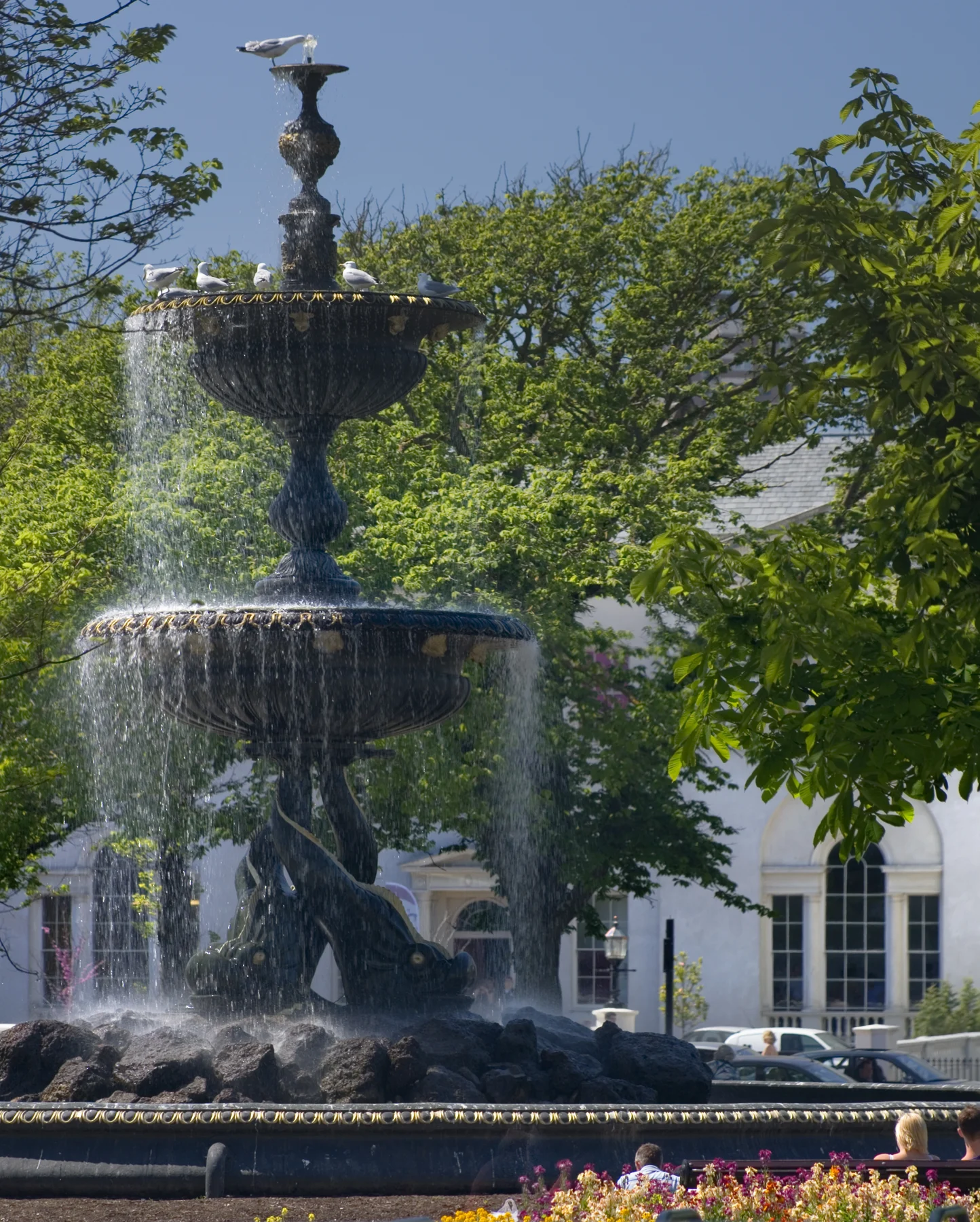
The relandscaped Steine Gardens form part of the completed area. The council marked the opening by switching on the Victoria Fountain, bringing councillors, officers and invited guests to see the public spaces and cycle lane.
Councillor Trevor Muten, the cabinet member for transport and city infrastructure, said: “Valley Gardens is far more than a transport project.” He pointed to the public spaces as somewhere to sit, relax and hold outdoor events.
There is a useful distinction here between a route through the city and the space beside it. Both need to work: people cycling need a clear line through the junctions, while people walking or stopping should not have to negotiate an unclear cycling route. We have not ridden the completed scheme, and the council’s announcement is not independent evidence of its safety performance.
The cost and the long lead-in
The final phase had a £12.8 million budget. The council identifies £6 million from the former Coast to Capital Local Enterprise Partnership’s Local Growth Fund, £4 million of council borrowing, £2.3 million from Department for Transport funding streams and £500,000 in developer contributions.
Funding was agreed in 2019, consultation followed in 2020 and detailed design was approved in 2022. Following a further review, the go-ahead came in January 2024 and construction began that November. The new Aquarium junction was among the later elements, with work starting in December 2025.
Read the council’s opening announcement and project timeline.
Comments & discussion
Have your say. No account needed; reader comments appear after review.
Leave a comment