
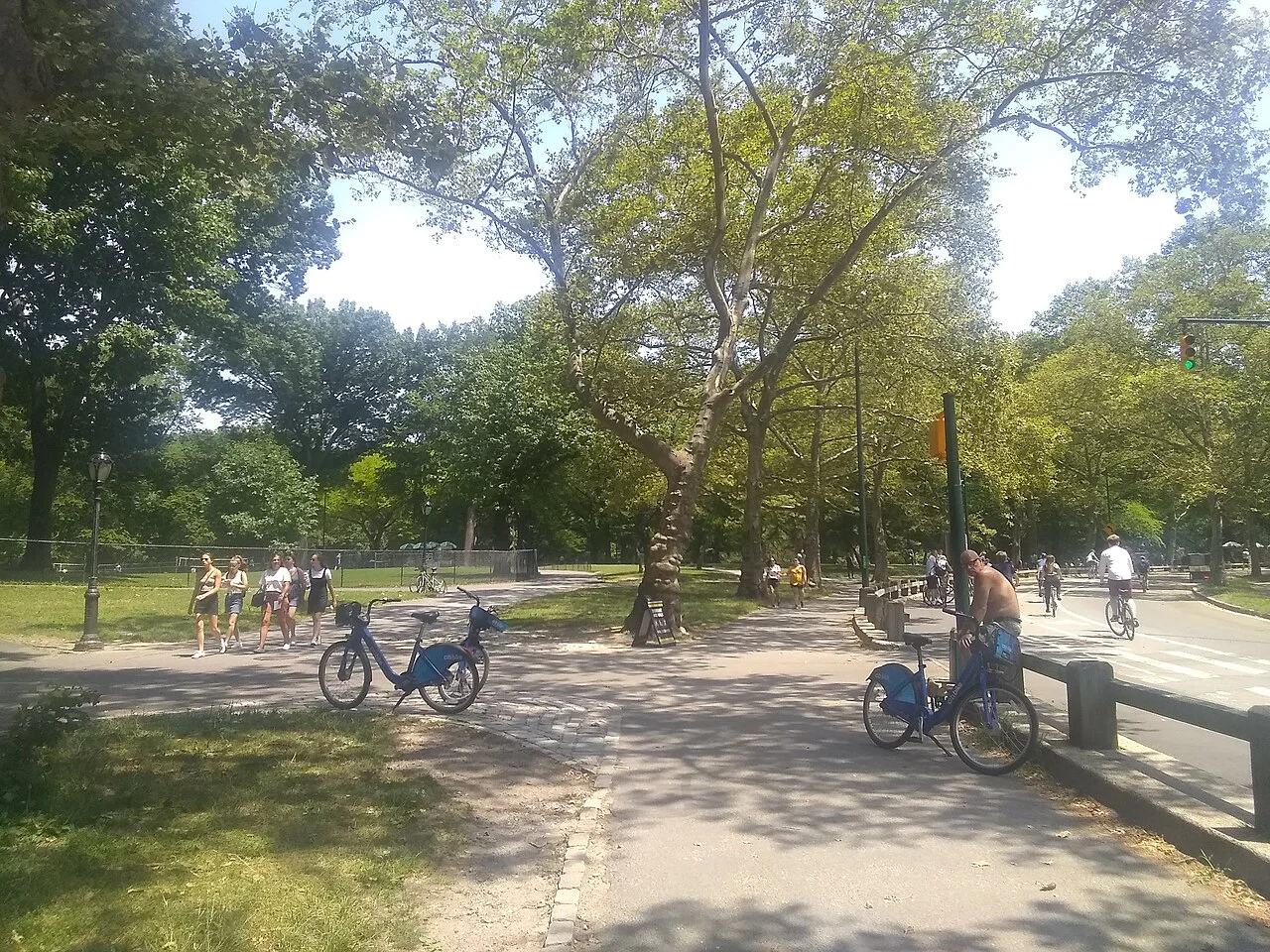
A demonstration in New York’s Central Park has put e-bike access back under scrutiny, with campaigners demanding a ban and stronger protection for pedestrians. The immediate problem they describe is straightforward: people crossing the park’s drives should not have to gamble on whether an approaching rider will stop.
The New York City E-Vehicle Safety Alliance organised the protest on Tuesday 27 October, according to WABC-TV’s original report. The group opposes the redesign of the park’s six-mile loop and argues that electric vehicles should be excluded.
That is a campaign demand, not a newly introduced ban. NYC Department of Transportation guidance checked on 28 October continues to list legal e-bikes as permitted on park drives and greenways. It distinguishes them from mopeds, which are not permitted there.
Pedestrian safety is the starting point
Concern about dangerous riding should not be brushed aside as hostility to cycling. A park must work for people who move slowly, cannot judge an approaching vehicle easily, or simply want to cross without being hurried out of the way.
In a statement reported by WABC-TV, NYC Parks said: “Reckless behavior is never permitted.” Its response referred to making greenways and park drives safer for people travelling on foot, by bicycle or on a legal micromobility device.
There is a clear responsibility for riders here. Having access to a car-free road does not give anyone priority over a person at a crossing, and passing too closely is intimidating even when no collision follows.
The redesign is meant to separate different speeds
The Central Park Conservancy’s current guide describes an inner lane for pedestrians and joggers, a middle lane for slower cyclists and an outer lane for faster permitted users. It tells cyclists to stop and wait for pedestrians at crossings.
NYC DOT began repaving and re-striping in 2025, following a safety and circulation study. The intention is to make the allocation of space more consistent and reduce conflicts between people travelling at different speeds. A plan on paper, however, still has to be legible from a saddle or a crossing: signs, markings and predictable behaviour all matter.
For visitors, the practical advice is to follow current signs and the lane suited to their travel, leave room when passing and be ready to stop at crossings. Electric assistance does not remove any of those duties.
Our view: make safe behaviour easier, and enforce it
A blanket ban would also exclude people using ordinary legal e-bikes considerately. Our preference is to judge the dangerous behaviour directly, improve separation where people are being put into conflict, and make crossings work for pedestrians.
That is not an argument for leaving things as they are. Enforcement and better design should reinforce each other. The measure of success is whether people can walk, roll and ride through the park without feeling threatened—not which group wins an argument about who belongs there.
Original 27 October protest report
Comments & discussion
Have your say. No account needed; reader comments appear after review.
Leave a comment