The 2027 Giro d’Italia will send riders over the Mortirolo twice in one day, then leave a steep finish on Monte Zoncolan for the final weekend. The route, unveiled in Rome on 3 November, runs from Trieste on 8 May to Rome on 30 May. For fans choosing when to watch, the big climbs start well before that last week.
RCS Sport, the race organiser, sets out 21 stages and 3,418.9km of racing. Two tests against the clock sit among the road stages. There is a full day in Slovenia, too. The useful question is how those parts fit together: where can a rider gain time, where can they lose it, and which days are worth keeping free?
The race does not wait for the Alps
Stage five, on 12 May, runs from Filottrano to Sarnano-Sassotetto. It is only 139km long, yet packs in 3,300m of climbing. That is the total height gained on all the hills, not the height of the finish above the sea. Going down between climbs does not cancel out the work already done going up.
Think of two rides with the same start and finish height. One stays flat; the other goes up and down five hills. They may end in the same place, but your legs will tell them apart. That is why a short mountain stage can be a much harder day than a long flat one.
RCS has chosen Filottrano to mark ten years since Michele Scarponi’s death. The summit finish then gives the riders chasing the general classification [the overall ranking by total time] an early test. A bad day here could leave a rider trying to make up lost seconds for the next two weeks.
Two time trials ask different questions
A time trial [a race against the clock with riders starting apart] changes the usual team contest. Riders cannot shelter in a bunch in the same way as on a road stage. A strong ride earns time straight from the clock; there is no need to sprint past a rival at the line.
The first comes on 14 May, from Sulmona to Campo di Giove, over 19.6km. The second half climbs at about 5%, according to the official route notes. In plain terms, that means about five metres of height gained for each 100 metres along the road. It asks for a well-judged effort as the road tilts up.
The second is longer and flatter: 37.3km from Monza’s motor racing circuit to Milan on 23 May. That should give riders who are strong on flat roads more room to use that skill. Together, the two time trials add up to 56.9km. Their place in the route matters as much as that total.
Before the Milan test, stage 14 finishes at Piani di Bobbio/Valtorta on 22 May. RCS lists 4,900m of climbing for that day. A rider must get through a hard mountain stage, rest, then race alone the next day. The fastest fresh rider is not always the fastest tired one.
Three dates to put in the diary
If you can only set aside a few days, start with 25 May. Stage 16 links Sondrio and Aprica over 192km, with 5,700m of climbing. The route goes over the Mortirolo, the Gavia, then the Mortirolo again. That gives a team several chances to put rivals under strain, rather than one final climb where everyone waits to attack.
Next comes 27 May, when stage 18 finishes at Madonna di Campiglio. It is another uphill finish late in the race. By then, days of effort may shape the gaps as much as any one climb. A rider who looks in control in week one still has to keep eating, resting and coping with the pace.
Then keep 29 May for Monte Zoncolan, reached from Ovaro on stage 20. The official route lists the last climb as 10.1km at an average of 11.9%, with stretches up to 22%. Those are steep roads even at a slow pace. For the race, they leave very little scope to hide a bad day.
Watching the race and riding the roads are different plans
The course can inspire a cycling trip, but a race map is not a ready-made holiday route. It joins places for a closed-road event with support. A visitor must also find safe access, a place to stay and a way back. The mountain days are best treated as ideas to research, not rides to copy in full.
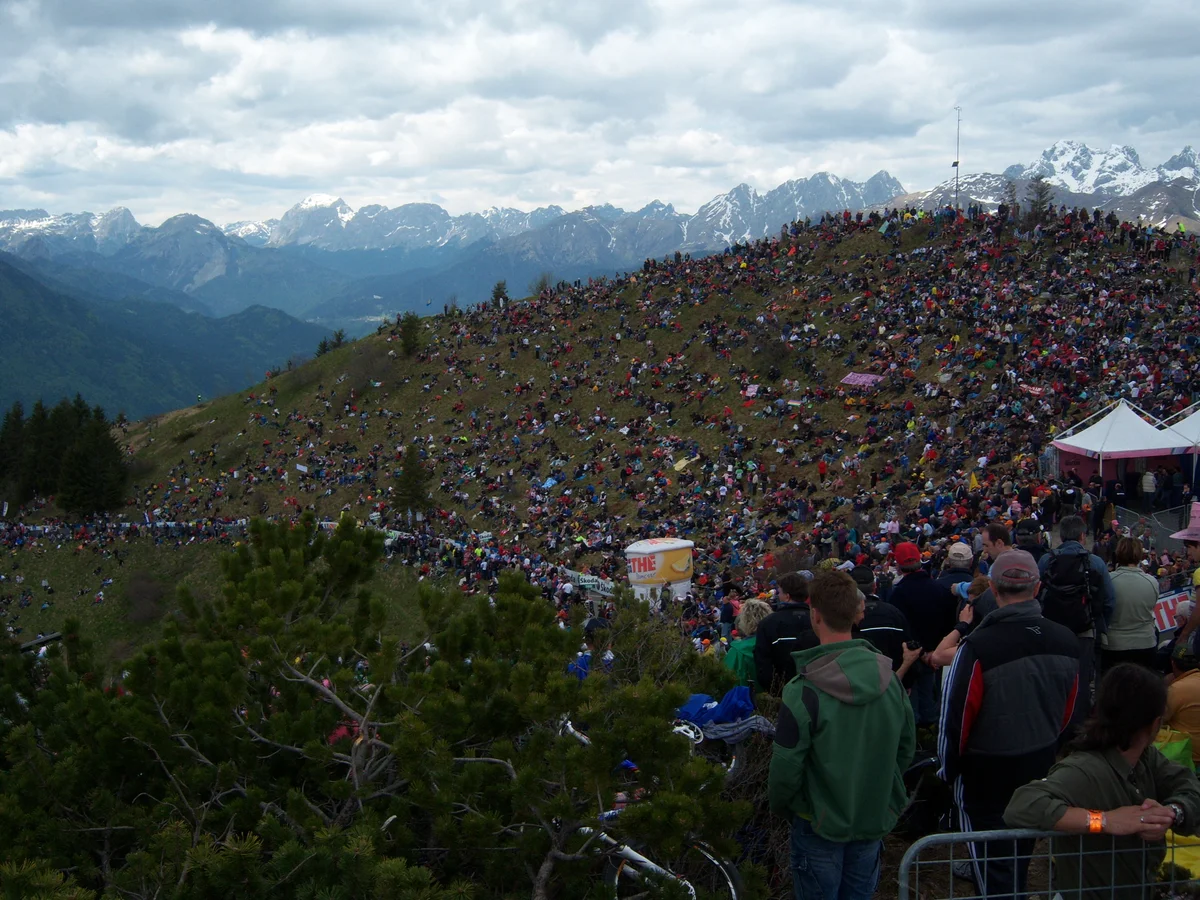
If you plan to watch from a climb, wait for the local access and road closure notices before fixing your last approach. A road that looks open on a map may close well before the riders arrive. Keep the route to your viewing spot separate from any ride you hope to do that day.
RCS cycling chief Luca Guercilena said, in our translation from its launch statement: “The design … includes important climbs.” The route backs that up. Our view is that the early tests are its most interesting feature: fans have a reason to follow the first week, not just return for the famous roads at the end.
The full stage list and profiles are on the official Giro route page. Our dates and route details were checked there and against the 3 November launch announcement on 4 November 2026. This is a route report; the race has not yet taken place.
Comments & discussion
Have your say. No account needed; reader comments appear after review.
Leave a comment