
Yes, bikes can use the new lanes
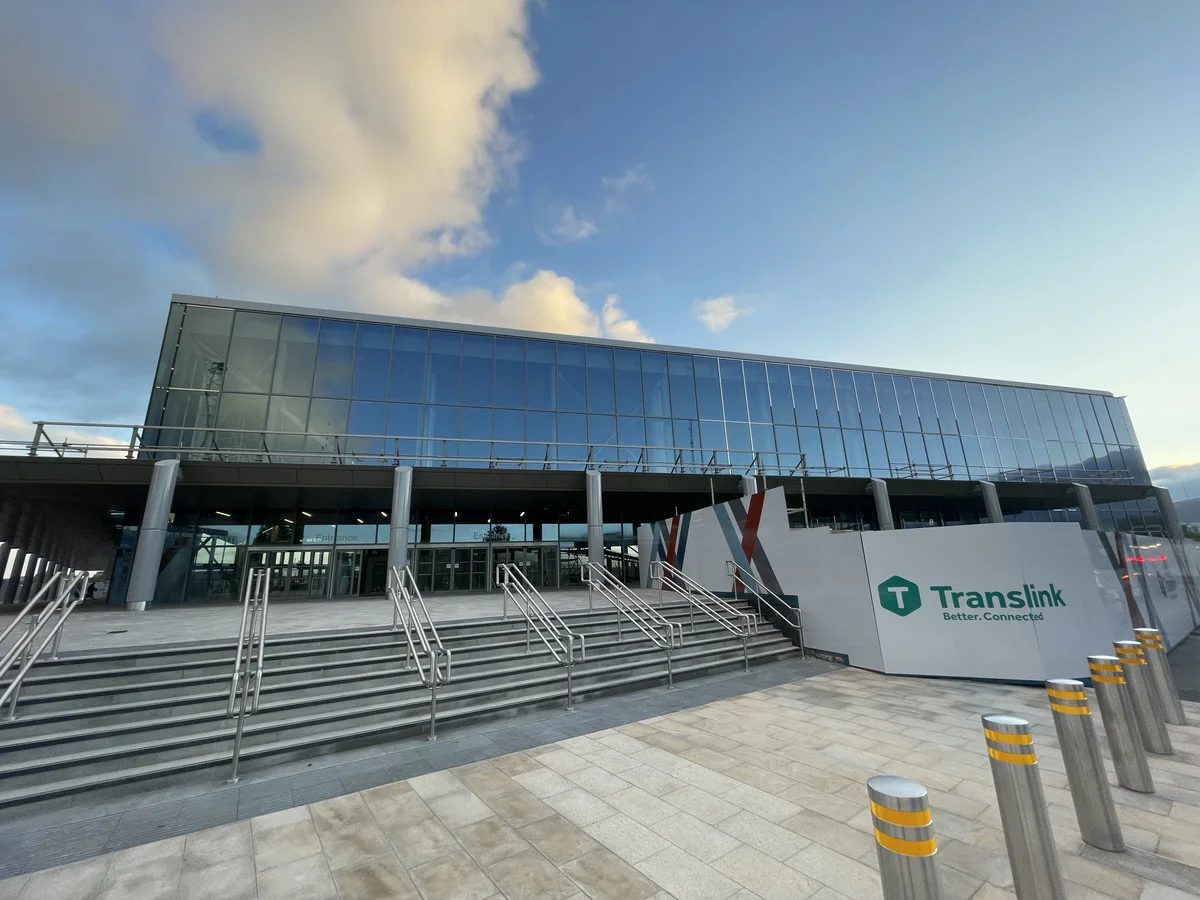
Cyclists can use the new bus lanes near Belfast Grand Central Station, which came into use on Monday 9 November. They run along Boyne Bridge Place and Hope Street. The change gives riders access to lanes set aside from most cars at busy times, but it does not create a bike-only route to the station.
The Department for Infrastructure confirmed the opening in a 9 November announcement. The lanes run from 7am to 7pm, Monday to Saturday. During those hours, buses, bikes, motorcycles and permitted taxis may use them. At other times, they are open to all vehicles. The department says the change will help buses move around the station as the final works nearby draw to a close.
That is useful news if this is part of your trip to work or to catch a train. It also needs a clear reading of the signs. Permission to use a bus lane does not mean there will only be bikes in it. You still share space with large vehicles and need to plan how you join and leave it. Read the riding guidance below if bus lanes are new to you.
What changes at 7pm?
Think of the lane as road space whose access rules change with the clock. At 8am on a Tuesday, most cars should be out of it. At 8pm that night, general traffic can use it too. The painted line may look the same on both trips, while the mix of vehicles is quite different. A quiet ride home is not something the lane rules can promise.
The same distinction applies to Sunday, which falls outside the stated Monday-to-Saturday hours. Do not treat the new lanes as a permanent ban on cars. Nor should a driver see an empty stretch during the working day and assume it is free to use. The department says the lanes will have white lines and signs, with enforcement in operation.
These are the hours for this scheme. A different bus lane on your journey may have different rules. Northern Ireland’s official guide to bus lanes explains that signs show the vehicles allowed and the times that apply. Read each new section as you reach it, rather than carrying one street’s rule across the whole city.
How to ride through a shared bus lane
A bus lane can remove one source of stress: a queue of cars using the same strip of road. It does not remove bus stops, junctions or the need to merge with traffic. The most useful skill is to look ahead for where your space changes, rather than focus only on the paint beside your wheels.
Take a bus stopped ahead. Before moving out, look behind and judge the gap in the next lane. Give a clear signal when it is safe to move. If there is no safe gap, wait. Watch for people stepping on or off the bus as well. Saving a few seconds is a poor trade for squeezing past where a passenger is about to step.
This advice follows the Northern Ireland Highway Code’s rules for cyclists. Rule 65 warns riders to take care when passing a bus or leaving a bus lane, as they enter a busier flow of traffic. It says to watch for people getting on and off buses. Those points matter just as much on a newly marked lane as an old one.
At the end of the lane, leave room and time to choose your next move. A right turn, a line of traffic or a change in lane direction may need a different position well before the last metre of paint. Do not assume a route on your phone has accounted for every sign or change on the street. If you need to stop and check, find a place out of the flow.
Check the whole trip to the station
The announcement names two streets; it is not a claim that every approach to Grand Central now has a protected cycle route. A protected lane has a physical divide from motor traffic. A bus lane relies on access rules and markings, while allowing some motor vehicles to share it. That difference can change whether a route suits a new rider or a family.
For a first trip, work backwards from where you need to arrive. Look at the street you approach on, the turn into this area and where you plan to get off the bike. If one junction still feels beyond your skills, these two lanes do not by themselves solve it. You can choose another approach or walk a short stretch where needed, keeping clear of other people.
Our view is that clear bike access is welcome, especially on streets that serve a major transport hub. The next test is how the route works as a whole: readable signs, space at stops and joins that do not leave a rider stranded. For now, the useful answer is simple: bikes are allowed, the hours matter, and this remains shared road space.
Comments & discussion
Have your say. No account needed; reader comments appear after review.
Leave a comment