Choose for rain and sweat, not just a big rating. A jacket can stop rain well and still leave you damp inside. Start with the trip, the layers you wear and how much heat you make. The aim is to arrive comfortable enough to want to do it again.
A gentle ride in work clothes needs room for layers. A hard hour needs more ways to let heat out. This guide helps you judge those choices and compare two real jackets. Try the coat you own first. It may already solve the problem.
Start with the journey, then choose the jacket
A shell is the outer layer that keeps weather off. It need not be your warm layer too. A separate fleece or top gives you more ways to dress for the day. You can leave it at home when the rain is warm rather than ride in a winter coat.
Try your own raincoat in a riding pose. Reach forward as you would to the bars. Do the sleeves still cover your wrists? Is your lower back covered? Does loose fabric stay clear of moving parts? If it fits, lets you move and has enough airflow, start there.
A cycling jacket earns its place when those checks reveal a real gap. A longer back, shaped sleeves and vents you can reach can help on frequent wet rides. A hood is a choice, not a must. It needs to turn with your head without blocking the view.
Room for clothing, easy vents, accessible pockets and coverage when reaching for the bars.
A closer riding cut, controlled fabric movement and airflow you can adjust as effort changes.
Comfort over hours, a useful hood if wanted, luggage compatibility and straightforward care.
What waterproof and breathable actually tell you
Water can get in through seams and openings as well as the cloth. Look for the whole jacket's rain protection, not just a fabric claim. Taped seams cover the tiny holes left by stitching. A surface that sheds beads of rain does not by itself prove the zip and seams keep rain out.
Hydrostatic head is a fabric test of how much water pressure it resists. It is often shown in millimetres. A higher figure in the same test means more pressure resisted. It does not mean a set number of dry hours on a bike.
Breathability means how readily moisture vapour can pass out through the fabric. Makers use more than one test. A figure from one method cannot simply be ranked against a figure from another. Sweat can still build up when your body makes it faster than it can leave.
Altura lists the Storm as 10K/10K. Keep that as a maker's specification, not a complete comfort score. A vent you can open before a hill may help more than a higher number. Fit, seams, openings and what you wear below all play a part.
Try it as a cyclist, not a coat hanger
Use the maker's size chart and try the jacket over the clothes you intend to wear. Reach for an imaginary handlebar. Bend your elbows and turn your head both ways. A coat can look tidy when you stand and pull tight as soon as you lean forward.
Try it with your work bag too. Straps may cover a vent or pocket, and a pack can trap heat on your back. Panniers keep that load off your body, but the jacket still needs to suit the way you ride.
Check zips and vents with gloves on. Can you reach the pocket when you need it? Can you close the cuff without a fight? Make changes while stopped if they would affect control. Those small jobs matter more after dark in rain than in a warm changing room.
Two useful jackets to compare
These two designs show different jobs a jacket can do. Their features come from maker pages, not our own rain test. UK prices were checked on 30 October 2026. Check stock in your size and colour.
 Manufacturer photograph
Commuting details & reflective coverage
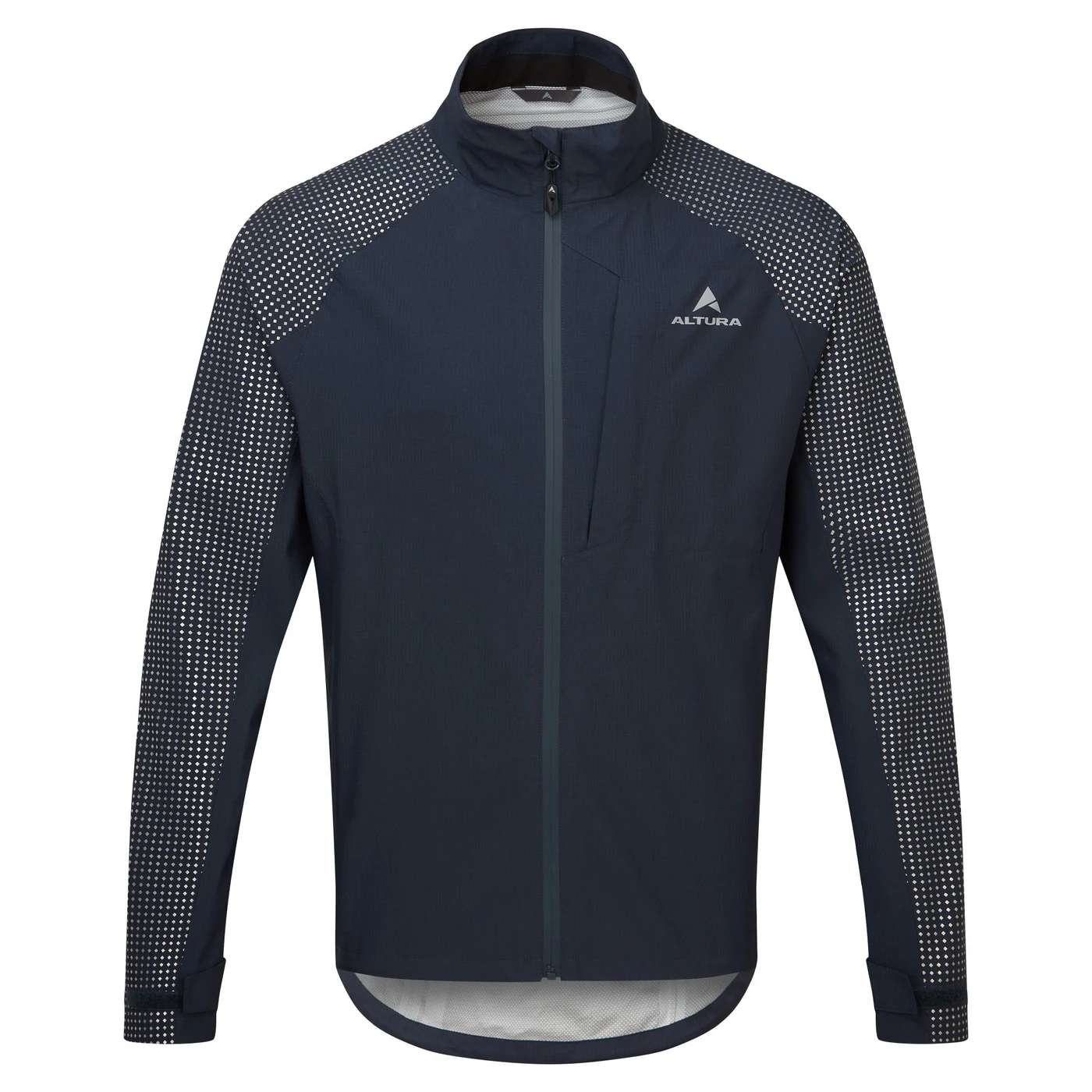
Altura Nightvision Storm Men’s
£100 · UK displayed price
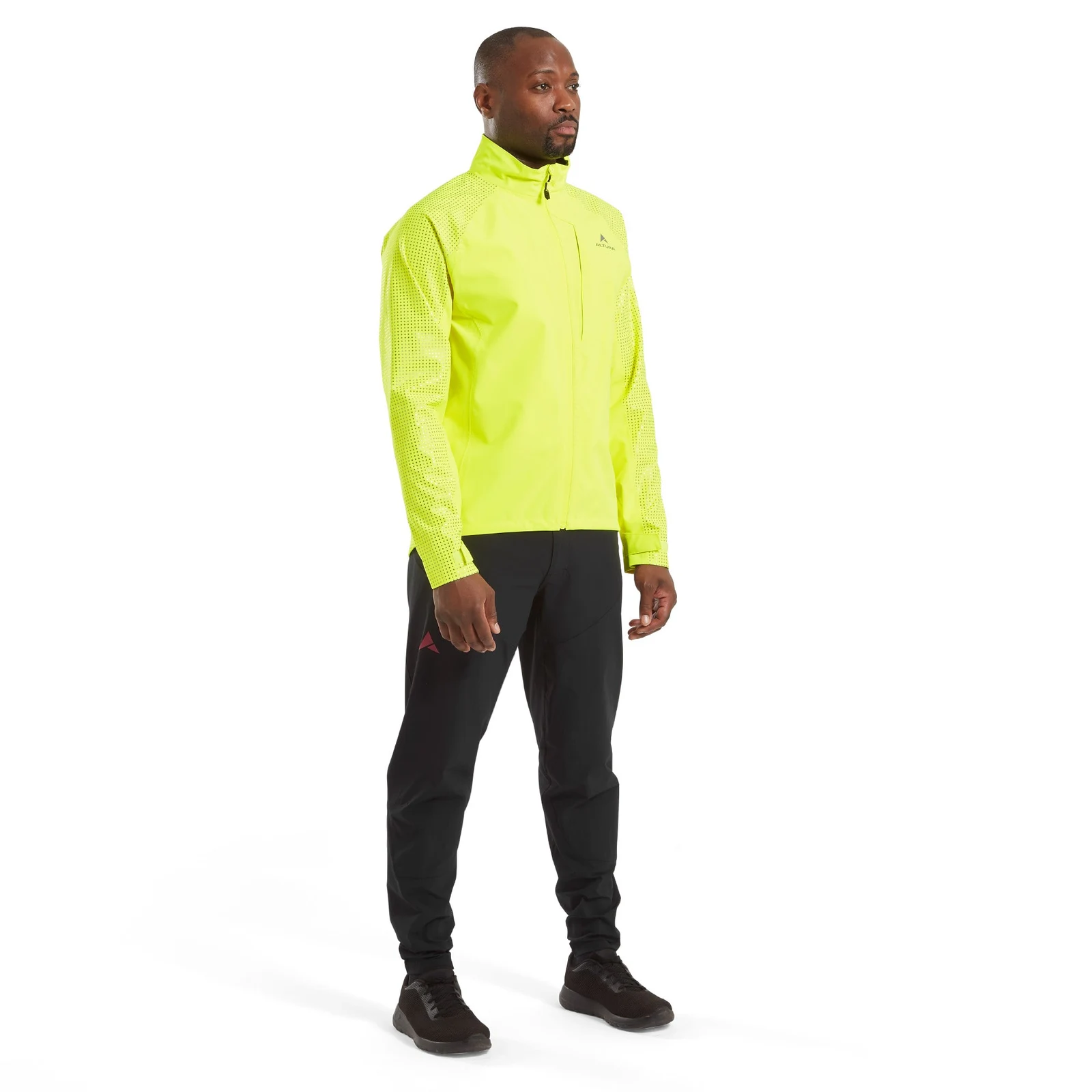
The Storm has a relaxed fit, reflective print, chest and rear pockets, and vents under the arms and at the back. The maker lists 10K/10K rain protection and breathability. Navy is shown here; the yellow jacket above is another colour option. Check the exact colour and size on sale.
Our choice here for storage and room to layer. It makes sense if those pockets and vents suit your daily ride. Do not buy by the reflective print alone. It needs light shining on it to work; it is not a light source.
View exact product & sizing ↗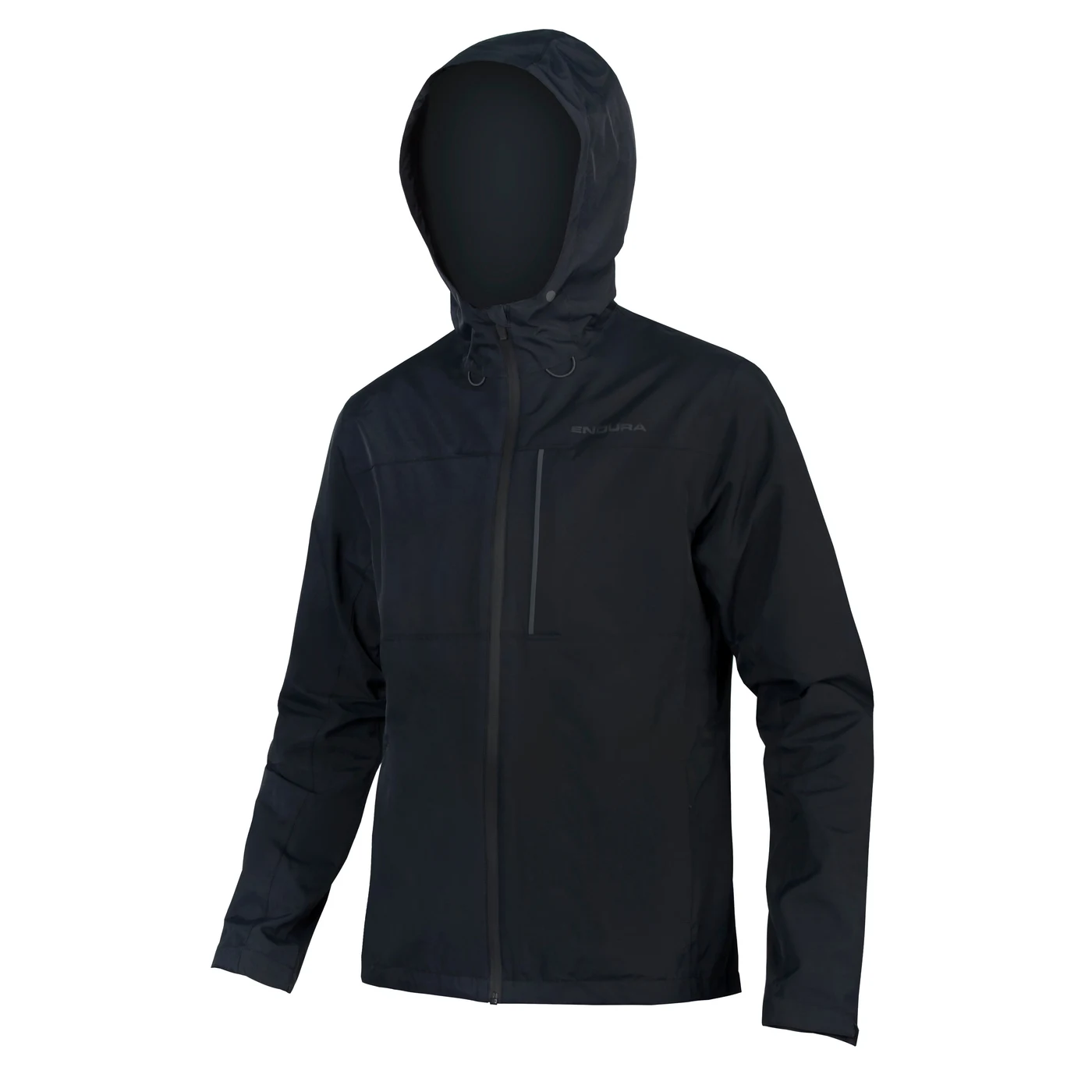 Manufacturer photograph
A hooded shell for riding & everyday use
Endura Men’s Hummvee Waterproof Hooded Jacket
£125 · UK displayed price
The black RE9156BK Hummvee has a two-layer weather fabric, a separate mesh lining and zipped vents under the arms. Its hood makes it worth a look if you want one jacket for walking as well as riding. Check the exact version; a shared name does not prove every year has the same build.
Worth a look for mixed everyday use. The hood must leave your view clear when you look behind. Check how the jacket fits over layers and how much space it takes in a bag. The cloth description cannot tell you how the whole coat will feel on your ride.
View exact product & sizing ↗Fluorescent and reflective do different jobs
Bright fluorescent colours can help a rider stand out in daylight. Reflective material sends light back towards its source. That is useful after dark when headlights shine on it. A grey reflective coat does not automatically give the same contrast as a bright one by day.
The Highway Code advises that reflective clothing or accessories can help visibility in the dark. That is not a promise that a driver will see you, and it does not move responsibility for safe driving onto your coat. Keep the required lights and reflectors on the bike. Check the rules for where you ride.
“reflective clothing and/or accessories … can increase your visibility in the dark”
The Highway Code, Rule 59, Great Britain · excerpt
Before replacing a jacket, check the care label
When the outer cloth soaks up rain, the coat can feel cold and clammy. That alone does not prove the inner rain barrier has failed. Dirt or a worn surface treatment may be part of the problem. Check where the damp starts before replacing the whole jacket.
Follow that coat's wash and care label. DWR [durable water repellent] is the surface treatment that helps rain bead up. A spray may renew that treatment; it will not mend torn cloth or peeling seam tape. GORE-TEX has its own care advice, but its heat and wash instructions are not rules for every jacket.
On the bike, let heat out early. Open a vent before the climb if you can do so safely, and adjust your layers for the effort. No fabric can make a thick winter outfit feel like a T-shirt on a hard hill.
The short answers
Do I need an expensive cycling-specific waterproof?
No. Check how your own coat fits when you reach for the bars. Check the view, loose fabric and airflow too. Buy a bike-specific coat when it solves a problem on your rides.
Does a higher waterproof number mean a better jacket?
It describes one fabric test. It does not rate the whole coat. Seams, fit, vents and wear matter too. Compare test figures only when they use the same method.
Should I buy a jacket a size bigger?
Use the maker’s measurements and try it over your intended layers. You need room to move without excessive loose fabric or sleeves that interfere with the controls.
Why am I wet inside when it has not rained?
Sweat can build up faster than it can get out. Open vents before you get very hot. Wear fewer warm layers if needed and check whether your bag blocks the airflow.
Spend on the details you will use
We would start with a sound rain barrier, room to move and vents that are easy to use. Then choose the pockets, hood and colour that fit your week. The best coat is the one you can bear to wear when the forecast is bleak.
Pair it with gloves that work with its sleeves. Keep its care label. And resist buying a much thicker jacket just because the month changed: the hill home is still going to supply plenty of heat.
Research & sources
The product and care facts use the makers’ own pages. Links have no affiliate tracking. Prices were checked on the date above. Check your size, colour and full price before buying.
- Altura Nightvision Storm current specifications
- Endura Hummvee RE9156BK construction
- GORE-TEX outerwear care guidance
- The Highway Code: Rules 59 and 60
Product photographs are credited to their manufacturers. See Photo credits for individual sources.

Comments & discussion
Have your say. No account needed; reader comments appear after review.
Leave a comment