
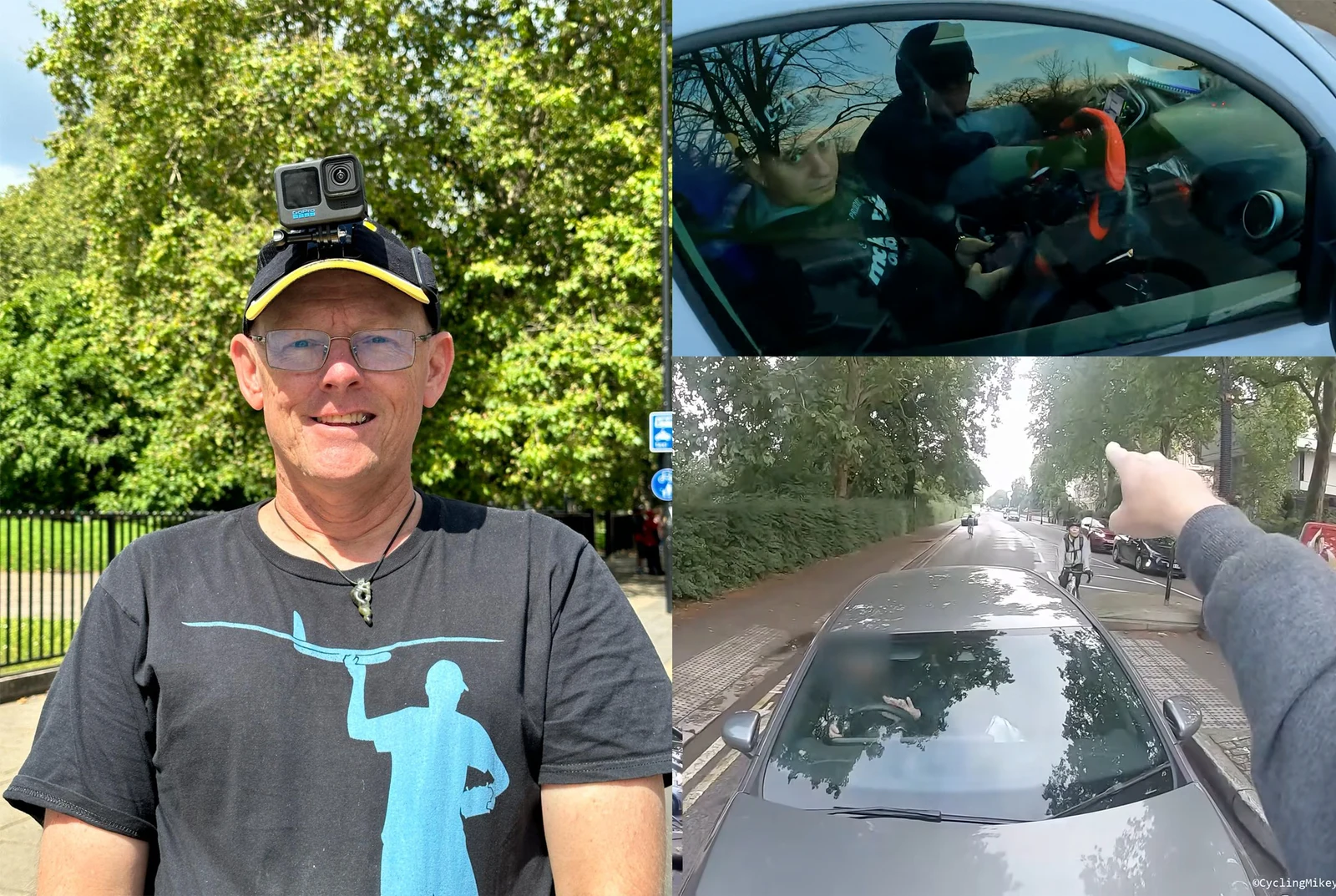
For a cyclist on the receiving end of dangerous driving, the vehicle often disappears before there is any realistic chance to respond. Cycling Mikey’s camera offers something more lasting: a record of what happened, and a way to put it before the police.
Cycling Mikey is Mike van Erp, a cycling activist and the creator of the CyclingMikey YouTube channel. His public work centres on recording road behaviour and reporting suspected offences. This is a profile of that approach, rather than a report of a new collision or court case.
Who is Cycling Mikey?
Van Erp describes his channel as life on the road viewed through a helmet camera. In its public description, he says he is also a driver, likes cars and objects to dangerous driving and risks taken around vulnerable road users [people less protected in a collision, including those walking and cycling].
That distinction matters. His stated concern is the danger created by someone’s choices behind the wheel. For people sharing the road with much heavier vehicles, taking that behaviour seriously is a reasonable demand.
His campaigning has also reached beyond his own channel. London Cycling Campaign’s programme for its 18 November 2023 Community Skills Summit listed him as a speaker in a session on communicating a campaign: a public example of his involvement in wider cycling advocacy.
Reporting is not the same as prosecuting
Camera reporting gives riders a practical route to seek accountability. The Metropolitan Police accepts online driving-offence reports with evidence; officers assess the recording and decide what action it supports. The cyclist supplies the evidence, while the decision about enforcement remains with the authorities.
In a November 2023 freedom-of-information response, the Met confirmed that it accepted footage through its public portal. It also said it did not actively search social-media platforms for evidence of dangerous driving. That response is dated; it is useful context for why submitting a report and uploading a clip are separate acts, rather than evidence of every current police practice.
The value of that process is straightforward: a dangerous encounter need not disappear with the departing vehicle. A clear original recording can preserve details that would otherwise be difficult to establish. This profile does not claim an independently audited prosecution total or a measured reduction in collisions from Van Erp’s work.
Why a phone in a traffic queue matters
One recurring subject of camera-based road reporting is handheld phone use. GOV.UK’s current guidance says the prohibition on holding and using a phone while driving still applies at traffic lights and in queues. It is not limited to making a call: the guidance also covers activities such as browsing, photographing and messaging, with specific exceptions including being safely parked.
The standard penalty can be six points and a £200 fine; court proceedings can bring different consequences. A stationary queue should not be confused with safely parking. Drivers should read the full guidance, including its exceptions, rather than rely on an old clip or an assumption about what counts as using a phone.
Why riders want a way to respond
The stakes go beyond an irritating encounter. Department for Transport figures record 79 pedal cyclists killed and 4,311 seriously injured in reported road collisions in Great Britain in 2025. These totals cover collisions with different circumstances; they do not establish driver fault in every case. But they make the consequences of road danger difficult to dismiss. Read the official casualty figures.
Government design guidance calls for high-quality, safe cycling infrastructure. Where a rider’s journey lacks a connected, usable route away from dangerous traffic, that ambition does not protect them in the moment. They still have to share the road and rely on other people’s decisions. See the cycle infrastructure guidance.
What an everyday rider can take from it
You do not need to adopt a public campaigner’s style to report a dangerous encounter. Prioritise getting clear of danger, preserve the original footage and use the relevant police force’s reporting process.
For London, the Met asks for driving-offence reports within seven days. Its evidence guidance calls for the complete incident, a readable registration where required and video covering a minute before and after. Keep the original for 12 months and be prepared to attend court. It also tells people to remove submitted evidence from social media. Check the force’s current instructions; a social-media upload is not a substitute for a report.
Original channel and official guidance
CyclingMikey’s original channel · London Cycling Campaign’s 2023 programme · GOV.UK phone-use guidance · Metropolitan Police evidence guidance · Met’s dated 2023 response
Join the discussion
What has worked for you? Share your experience or ask a question about this article.
Sign in with GitHub to comment. Your comment and GitHub profile name will be public. Comments appear when posted and may be moderated afterwards.
Keep replies relevant and respectful. No spam, personal information or unsupported accusations. Discussion and privacy information.