
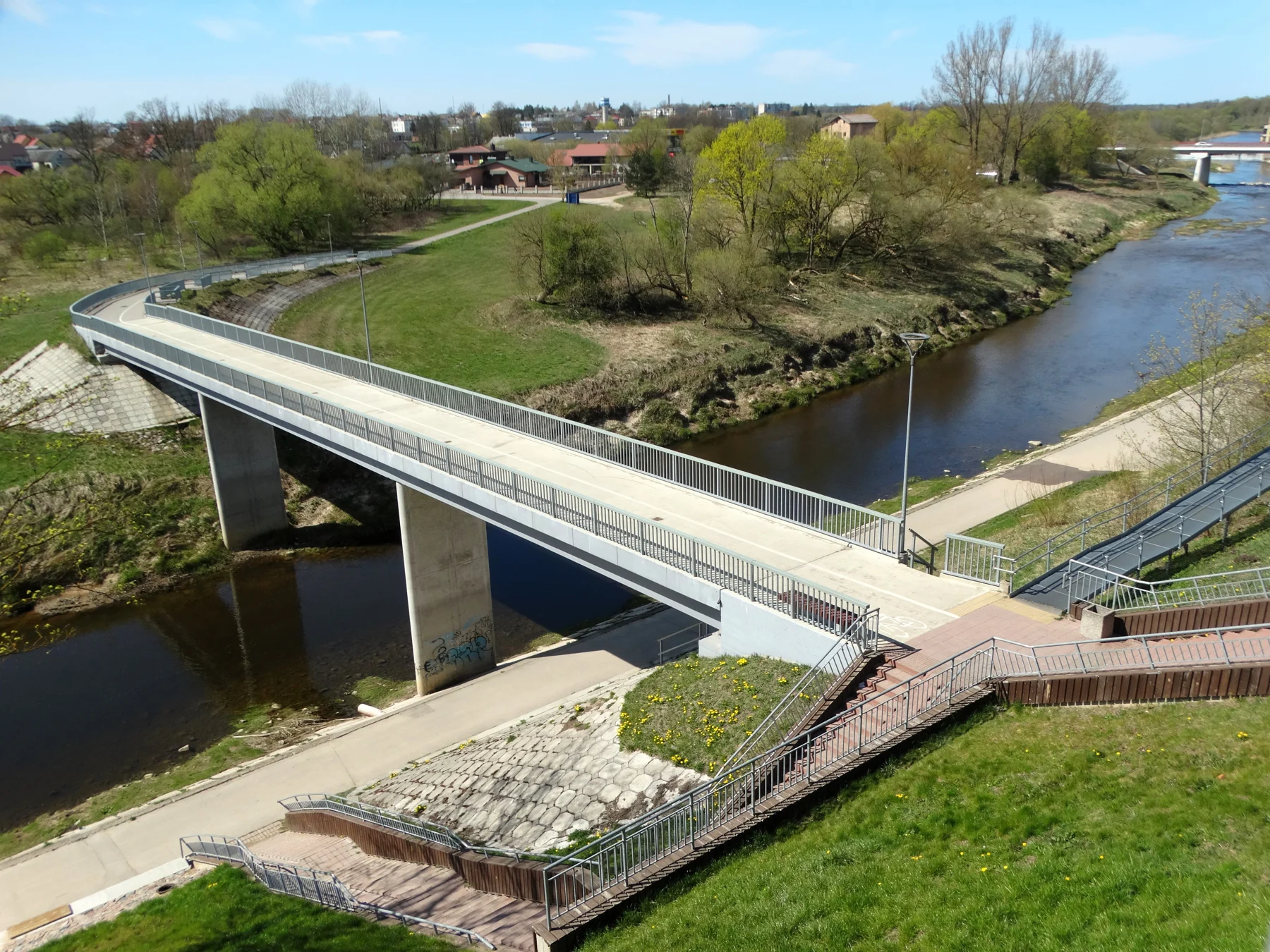
A planned 16.9km network of new cycling paths is among the investments outlined for Tauragė, Lithuania, in a European Investment Bank announcement on 20 October. The municipality is using a €20 million loan to help finance a much broader programme of improvements.
Cycling sits alongside zero-emission buses, work on the Jūra River waterfront and upgrades to public buildings and water services. The total investment programme exceeds €110 million, including European Union and municipal money. The €20 million headline is a loan for several kinds of project; the announcement gives no separate cycling budget.
What has actually been agreed?
There is an important distinction between this week’s announcement and the financing date. The bank’s project record lists the loan as signed on 8 July 2026. Its programme covers 2025–2030, with an approximate total cost of €112 million.
This is a framework loan (financing spread across a programme of projects). The bank says its long-term lending will help the municipality make use of EU grants. It is not a declaration that the cycling paths have opened.
From funding to rideable routes
The 20 October announcement also promises EIB advisory support for delivering cycling-path investments through the city’s sustainable transport programme. Tauragė is aiming for climate neutrality by 2030.
Mayor Dovydas Kaminskas said: “Cooperation between Tauragė and the EIB will accelerate the sustainable development of our city and the entire district”.
Neither the announcement nor the project summary supplies a street-by-street cycling map, construction timetable or opening dates. Those are the details riders need before these planned kilometres can become part of their journeys.
For a look at a different city’s approach to difficult junctions, read our report on Paris’s new cycling plan.
Comments & discussion
Have your say. No account needed; reader comments appear after review.
Leave a comment